
Exhibition

¡ BUEN CAMINO~ !

Great Journey (a.k.a Great Pilgrimage)!

Aug 31 - Sept 2

location

Before the Journey

As someone who’s neither religiously affiliated nor enthusiastic about exercising, why did I embark on this pilgrimage?

The reason is simple. It’s a spur of the moment thing.

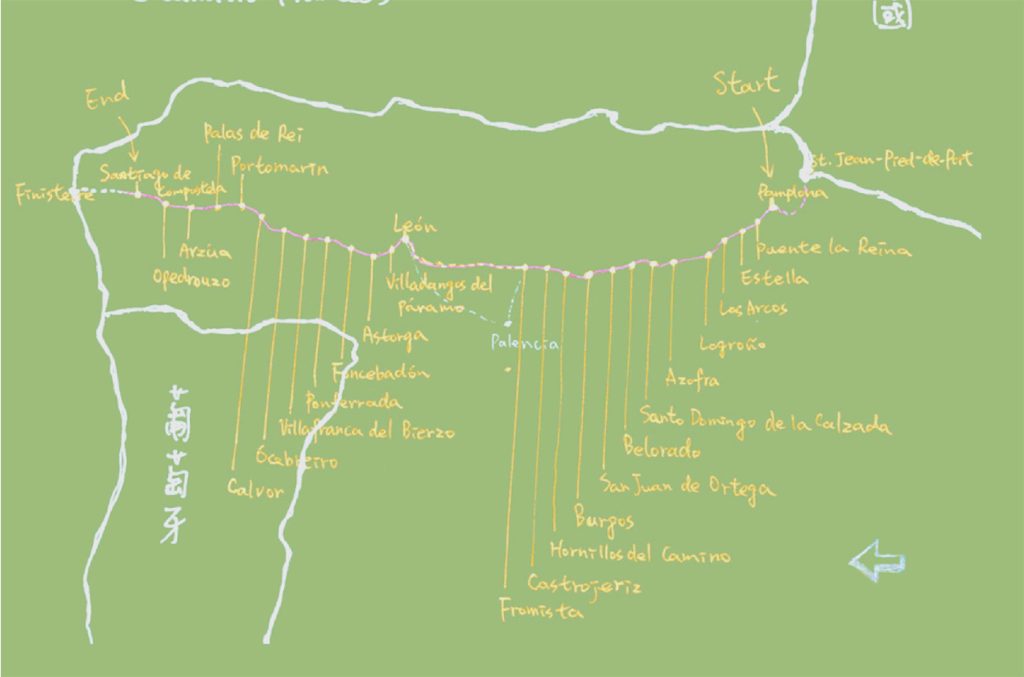
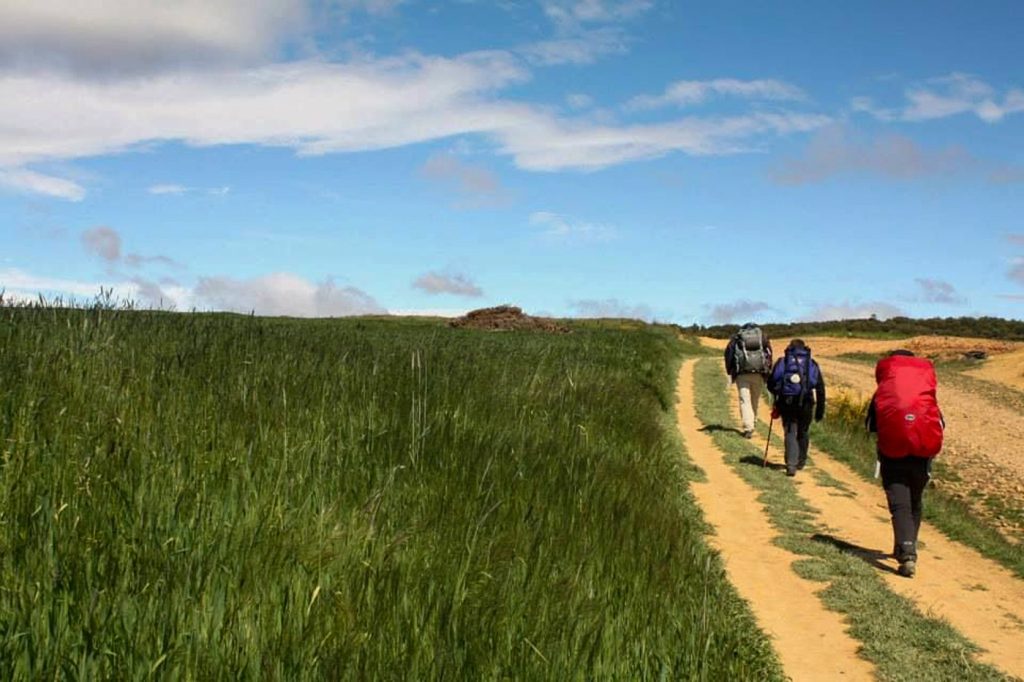
Because of that, I spent two months preparing for it. In late April 2013, I took a flight to Spain, and began my trip on Camino Francés (The French Way), one of the routes of Camino de Santiago.   

My etapas (stops) along the way

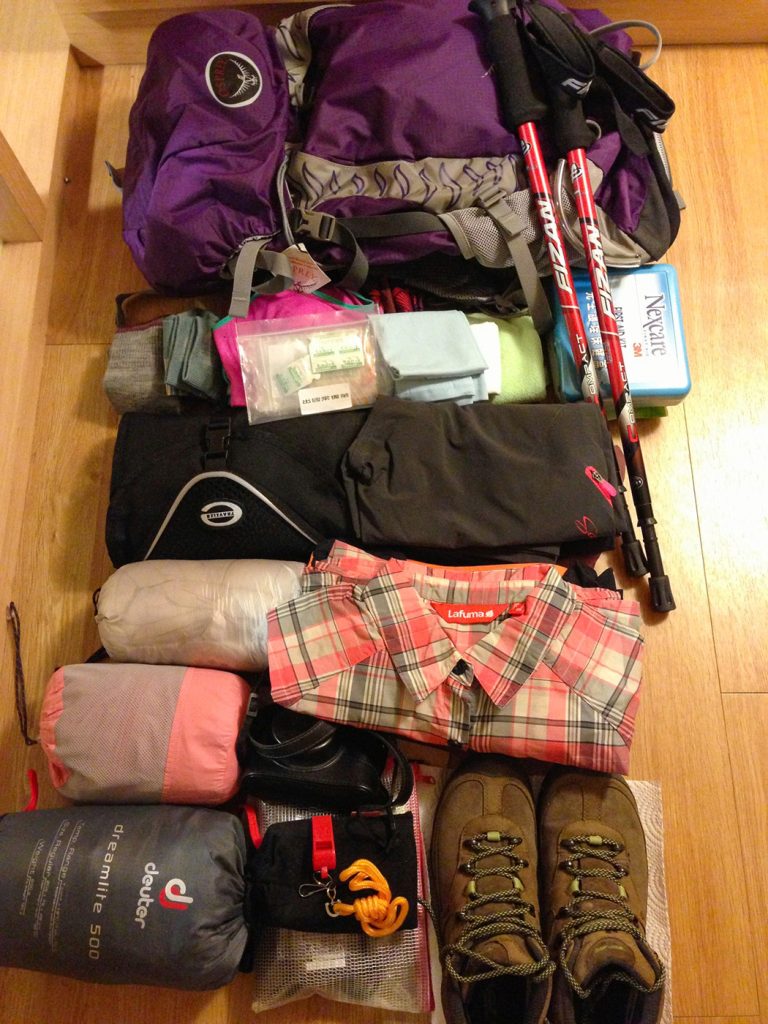
My belongings:

A backpack, a pair of hiking poles, a pair of hiking boots, flip-flops, a sleeping bag, two sets of fresh clothing items, two light jackets, a raincoat, toiletries, a travel med kit, a camera, a phone, a charger, personal IDs, water for daily hydration, some biscuits and dried fruits; with everything accounted, weighing well over 10 kilo.

The backpack is almost half my size!

Day 0 : ZARAGOZA

I decided to begin my pilgrimage in the city of Pamplona, home of Running of the Bulls, instead of the French town of St. Jean Pied de Port. This was mainly out of the consideration for my own physical stamina, as I didn’t have the confidence to scale Mt. Pyrenees right out of the gate.

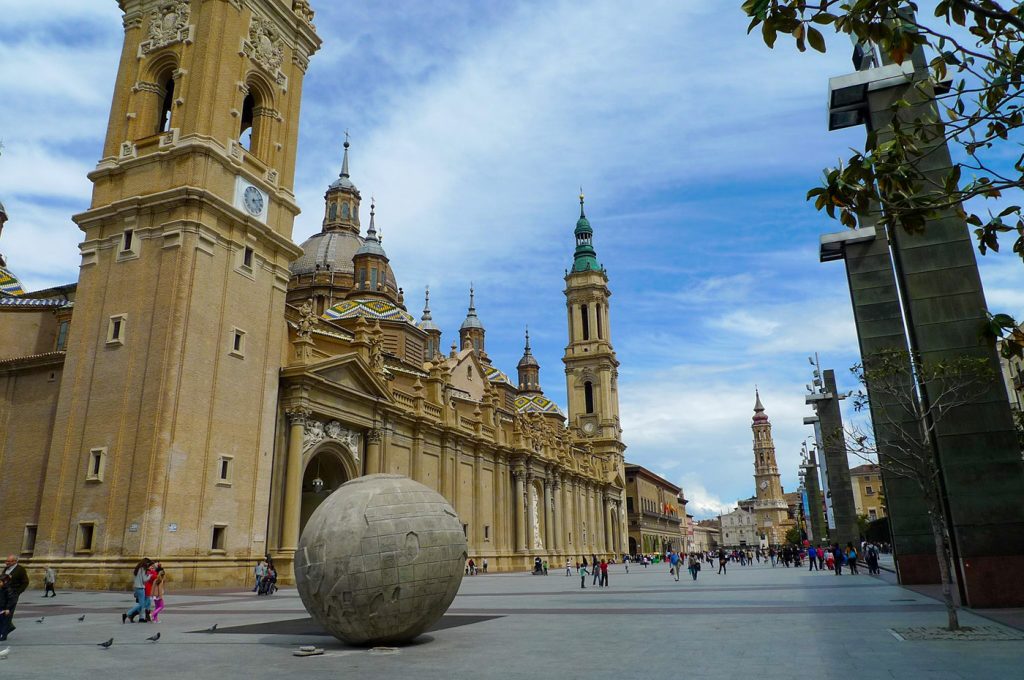
Surprisingly, in Zaragoza, where I stopped to rest before the pilgrimage, Basilica del Pilar is used as its spiritual hub, whereas other Spanish cities have their cathedrals as theirs. According to the legend surrounding Basilica del Pilar, Santiago the Apostle (Saint James) saw Mother Maria’s descending from a marble pillar, then he used that very pillar to build a chapel, becoming the earliest iteration of the basilica.

Before I could even begin my pilgrimage, I already met St. Santiago

Zaragoza’s spiritual hub: Baroque Basilica del Pilar (Basilica of Our Lady of the Pillar)

1

Saint-Jean-Pied-de-Port

2

Pamplona

3

Puente La Reina – Gares

4

Estella

5

Los Arcos

6

Logroño

7

Azofra

8

Santo Domingo de la Calzada

9

Belorado

10

San Juan de Ortega

11

Burgos

12

Hornillos del Camino

13

Castrojeriz

14

Frómista

15

León

16

Villadangos del Páramo

17

Astorga

18

Foncebadón

19

Ponferrada

20

Villafranca del Bierzo

21

O Cebreiro


22

Calvor

23

Portomarín

24

Palas de Rei

25

Arzúa

26

O Pedrouzo

27

Santiago de Compostela

28

Fisterra

Explore the route

DAY 1.

ZARAGOZA

-

DAY 3.

22KM

DAY 4.

ESTELLA

LOS ARCOS

22KM

DAY 5.

29KM

DAY 6.

37KM

DAY 7.

15KM

DAY 8.

23KM

DAY 10.

30KM

DAY 11.

DAY 14.

26KM

DAY 15

TRAIN

DAY 18.

28KM

DAY 19.

28KM

DAY 22.

36KM

DAY 23.

28KM

DAY 24.

25KM

DAY 25.

29KM

DAY 26.

19KM

DAY 28.

End of Trip

After the Pilgrimage

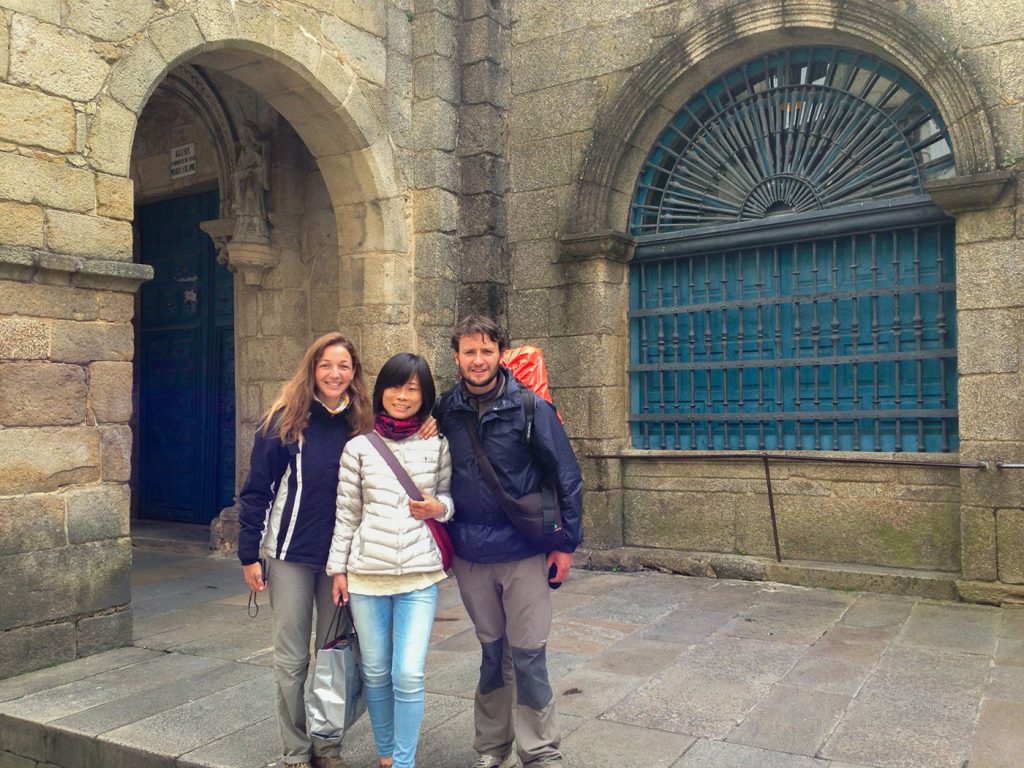
On the day I departed Santiago, I was the only person walking on the street. Suddenly, I heard my name called from behind. Turning around, I was pleasantly surprised to see Jose and Maria.

Jose, one of the noble souls that accompanied me on Camino duro, had to move ahead when my knee pain acted up again. I never thought we would meet again. Maria, who faced the same knee pain as I did, met me in Melide. She chose to rest instead of quitting after we talked. We agreed to meet at the cathedral if possible. Miraculously, her knee pain vanished when she regained her resolve. Meeting them before I left Santiago was a precious gift from Saint Santiago.

From start to finish, everyone has their own unique experience and feeling on this pilgrimage. I said that it is a spiritual path. When you step onto this path, It will guide you and perfect you.

Maria, Jose, and I

Contact Us

Performance / Vendor / Sponsorship Opportunities

TAIWANfest Vancouver is grateful to be held on the traditional, ancestral, and unceded territories of the Coast Salish peoples of the xʷməθkwəy̓əm (Musqueam Indian Band), Skwxwú7mesh (Squamish Nation), and Səl̓ílwətaɬ (Tsleil-Waututh Nation). We acknowledge our privilege to be gathered here, and commit to work with and be respectful to the Indigenous peoples of this land while we engage in meaningful conversations of culture and reconciliation.

Join Our Newsletter

For Early Announcements And More

DAY
01.

2013.5.2
-

ZARAGOZA

PAMPLONA

Pamplona is the capital city of the Chartered Community of Navarre in Spain. Running of the Bull is held here every July, and it became world-famous thanks to Hemingway’s vivid description.

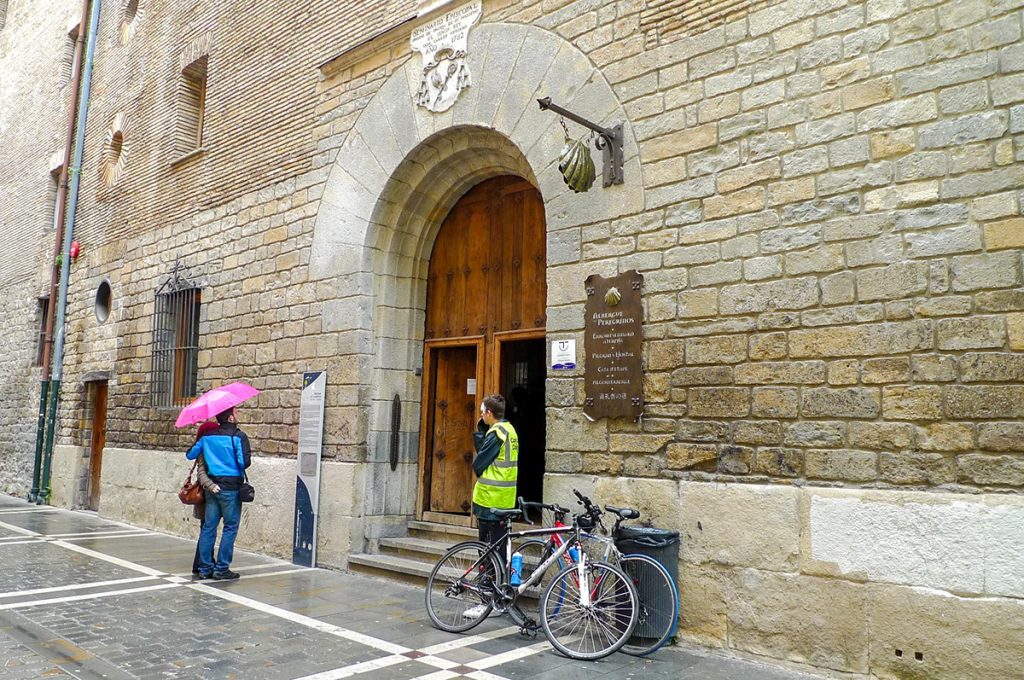
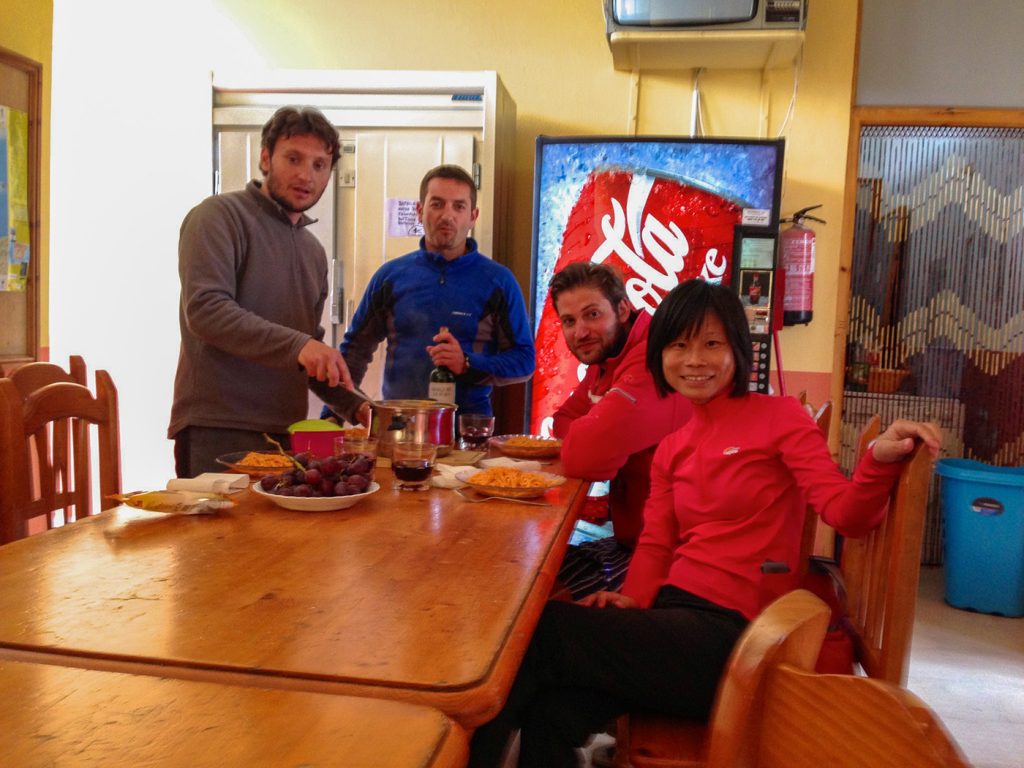
Around 3PM, I checked into this trip’s first shelter, Jesus y Maria, and it was my first experience of sharing quarters with complete strangers. This historic building has a total of 114 beds. While applying for a bed at the reception, I also bought a Camino passport, a credential that must be stamped when checking in at subsequent shelters.

Shelters (Albergue) are mainly divided into three types: municipal (it’s called Xunta in Galicia autonomous community), parish (Parroquial) and private (Privado). Check-in time at 2PM; lights out at 10PM and access to shelter will be restricted. All pilgrims must check-out before 8AM. However, due to the impact of Covid, there have been some changes to the shelter policies.

DAY
02.

2013.5.3
25KM

PAMPLONA

PUENTE LA REINA

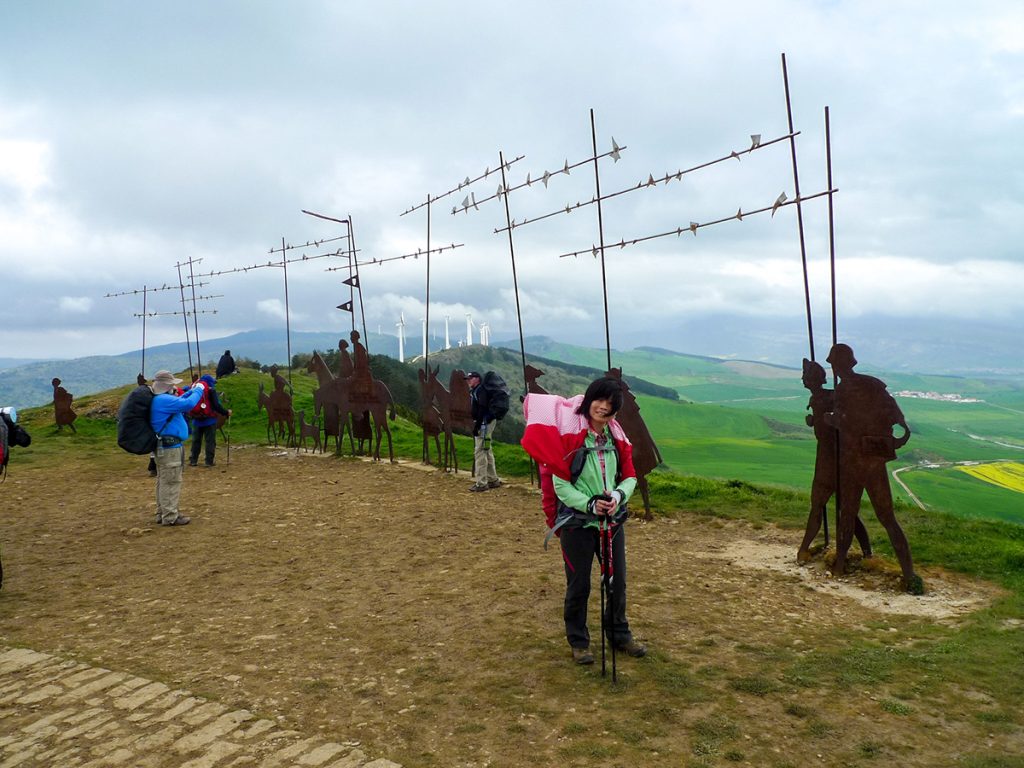
Once I reached the top of Alto del Perdón (Hill of Forgiveness), I felt the strong wind rushing past. There are giant wind turbines set along the ridges on either side. On top of Alto del Perdón, there’s a row of metal pilgrim sculptures; those sculptures are a popular attraction of the Camino. This is the first hill of my pilgrimage, but it’s just one of many hills that I’d be scaling.

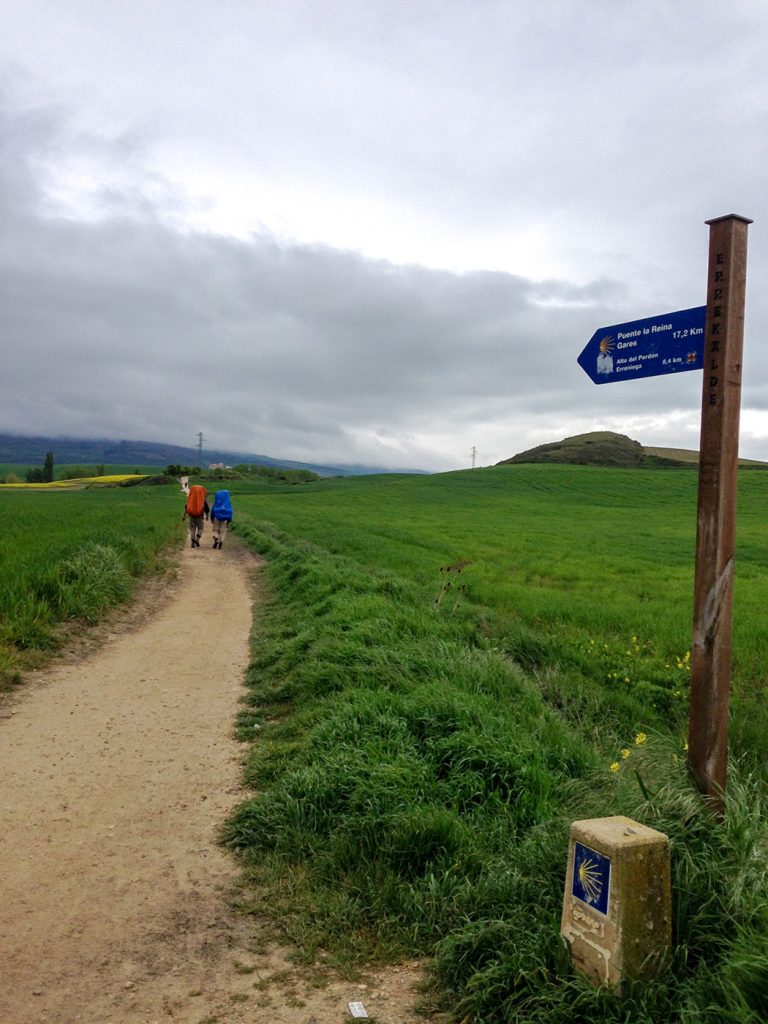
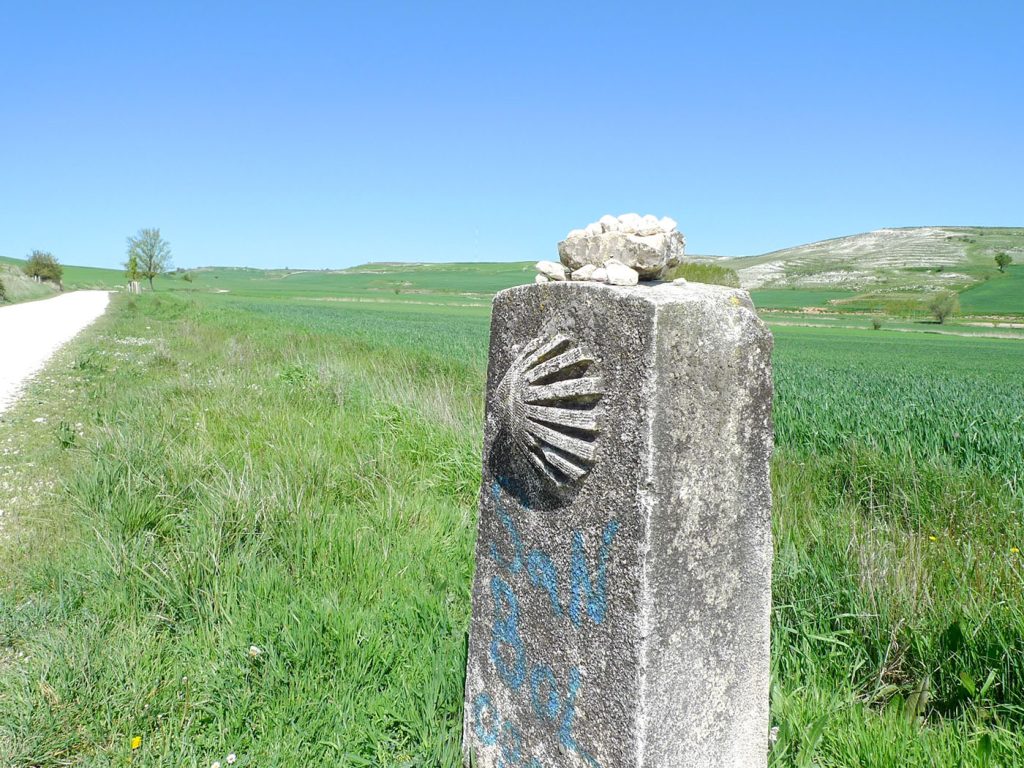
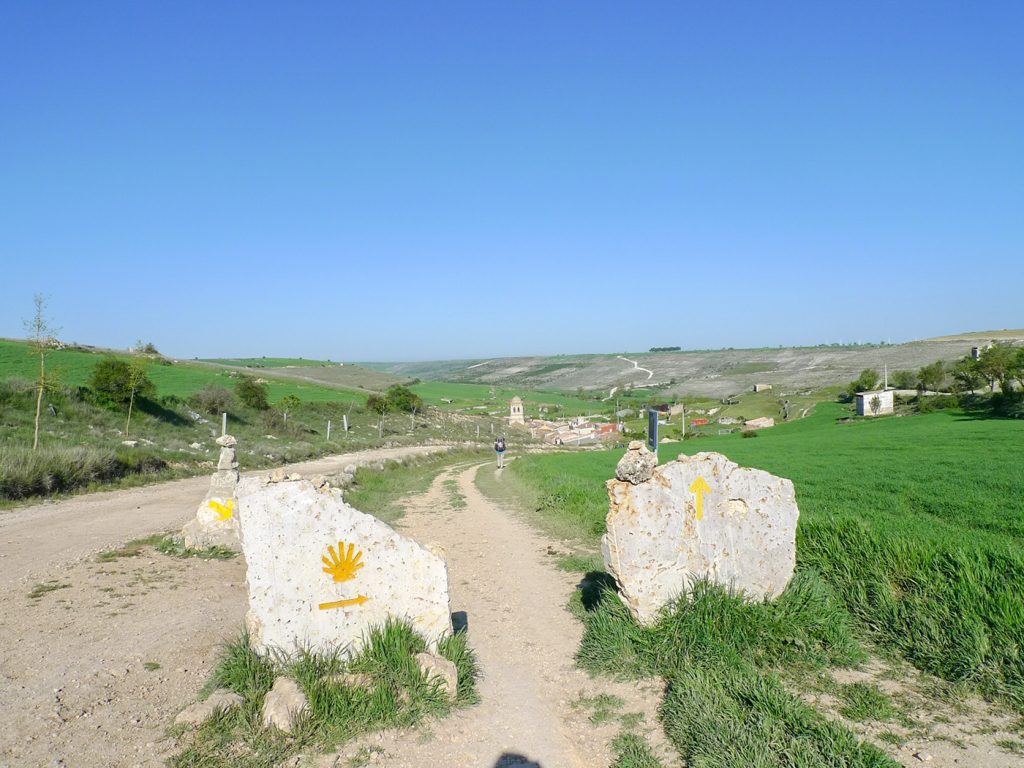
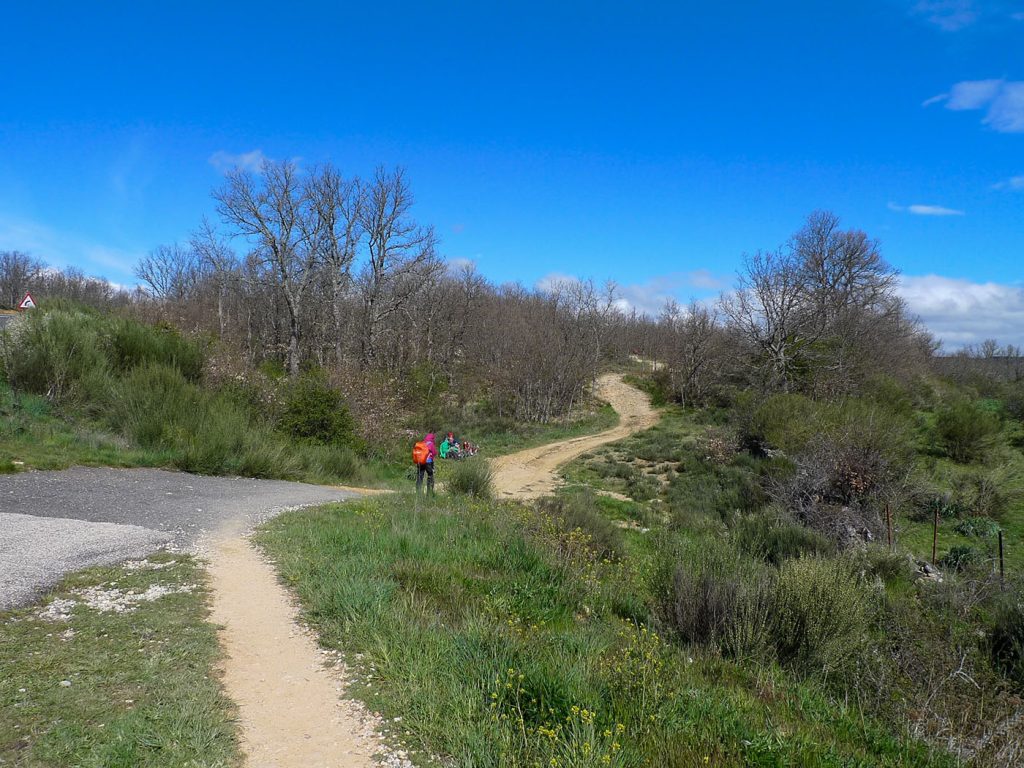
Following the yellow arrows and shell symbols, it’s really hard for you to get lost!

DAY
03.

2013.5.4
22KM

PUENTE LA REINA

ESTELLA

The sun was beating down on me as I set out in the morning. After passing through several hills, I was already sweating profusely. One section of the Camino is right next to a highway, separated by a mere fence that divides the heritage road from the modern road. After a fair distance, the Camino led to a quieter scenery.

Many pilgrims recount their encounter with dancing butterflies on the Camino. If they stray from the path, as long as they find where the butterflies are, they will find their way back. However, I did not experience this, as I didn’t get lost while hiking!

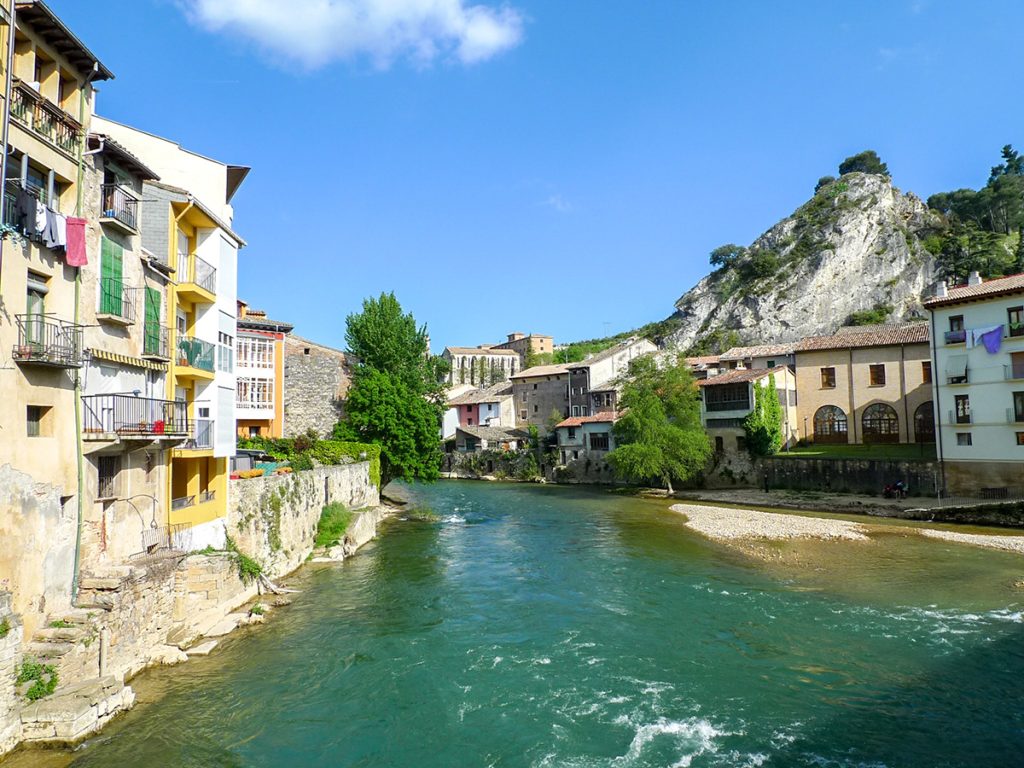
The medieval architecture and monument in the city of Estrella gives off a strong sense of history. Puente de Cárcel (lit. the Prison Bridge), which spans El río Ega (the Ega) that runs through the town, has stood for thousands of years.

Highway to the side

Puente de Cárcel (Prison Bridge)

DAY
04.

2013.5.5
22KM

ESTELLA

LOS ARCOS

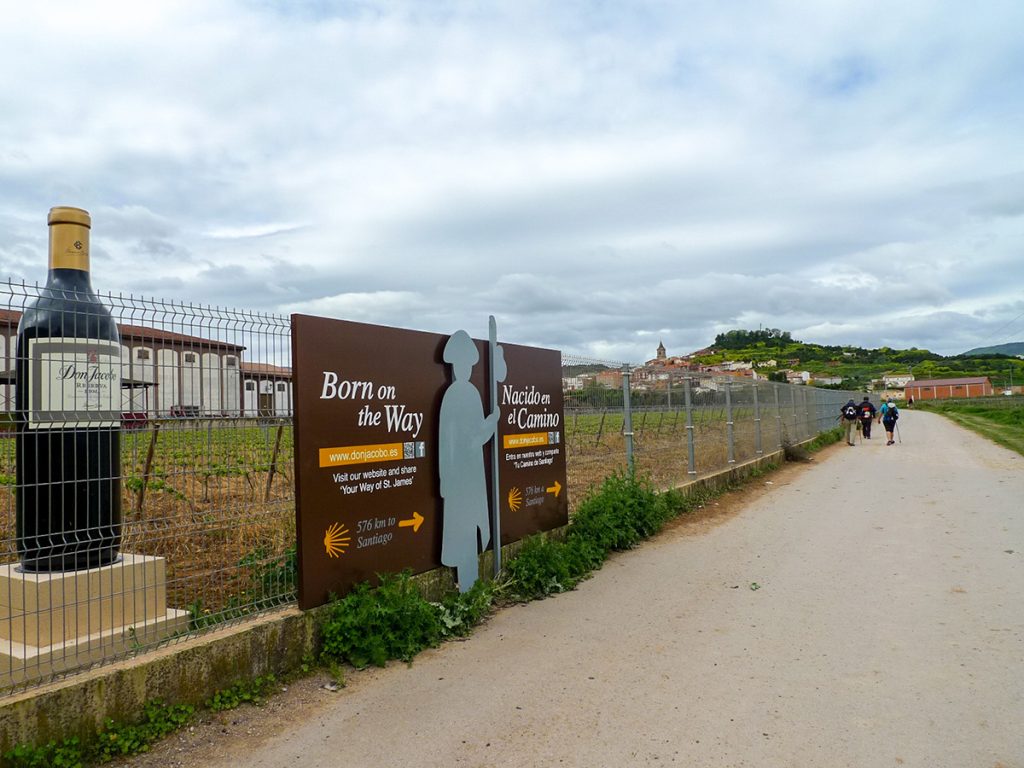
Not long after leaving Estella, I arrived at Bodegas Irache (Irache winery), a well-known attraction on the Camino, where free red wine was provided. When I arrived, one of the pilgrims had just poured out the water from his bottle and was ready for some wine. Unfortunately, there was no more red wine. He was disappointed and kept chanting: “No Vino, No Camino!” (Got no wine? Will not travel!), which made everyone laugh. Since there was no wine to drink, I had to continue my hike.

It was close to noon and I arrived at Villamayor de Monjardín (Monjardínville), which is located on the hillside. The slope of the hill was very steep. When I finally reached the post office in front of the town square, my knees that’s been in discomfort since the day prior suddenly felt a sharp pain.

After resting for half an hour, I stood up again and the pain was gone. I myself witnessed a miracle on this pilgrimage. When I described it to other pilgrims, everybody believed that I must have been blessed by St. Santiago.

The phrase ¡Buen Camino! means a wonderful pilgrimage, a greeting used by pilgrims to bless one another. This was also the phrase that pilgrims from medieval times shouted to encourage everyone to march on bravely.

DAY
05.

2013.5.6
29KM

LOS ARCOS

LOGROÑO

Passing through the town of Torres del Rio (Towers of the River), there was an octagonal Roman church built in the 12th century, which protects the local residents and pilgrims coming and going. On the pilgrimage road, there are numerous such historical landscapes that are more than thousands of years old. They have not disappeared with the changes of the times, nor have they been developed with the pace of modernization, nor have they been shaped into inaccessible historical relics. They continue to exist in people’s daily lives.

Because of the heat, the hike tired me out easily. I also worried that my knee pain would resurface, so I slowed down my pace. The pain really disappeared for a while, but it returned during the last few days of my pilgrimage due to frequent long hikes.

12th century octagonal Roman church

When walking on a modern road, there are often sections of road that are not very comfortable to trek.

Always find shell symbols/yellow arrows where you least expected

DAY
06.

2013.5.7
37KM

LOGROÑO

AZOFRA

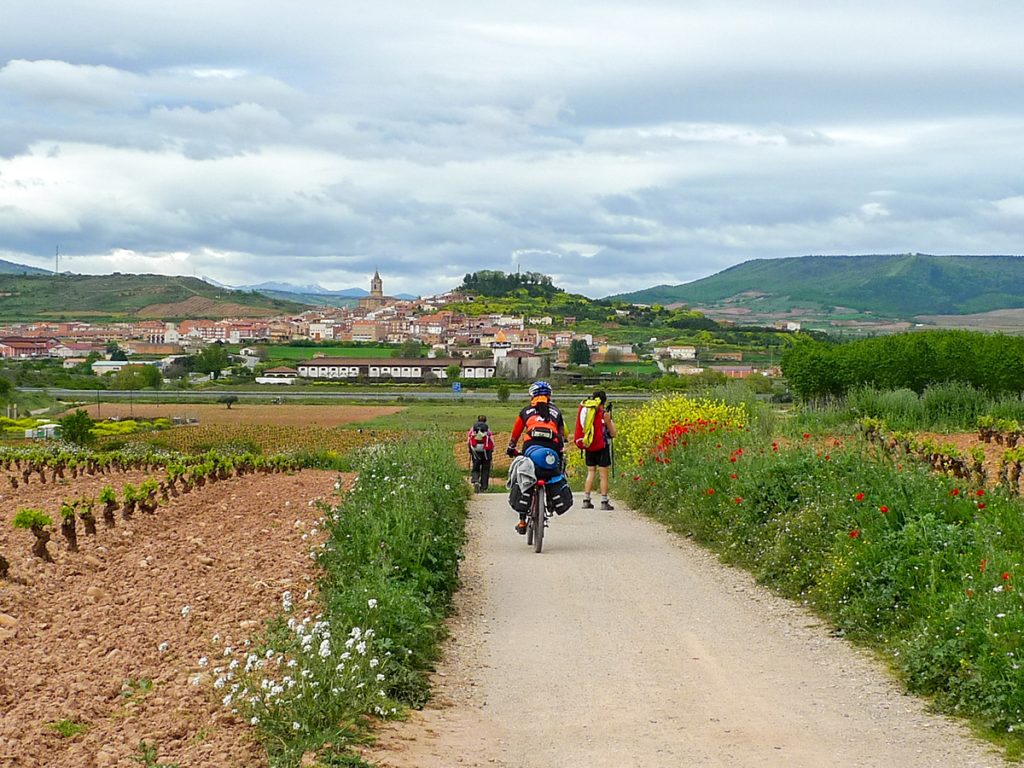
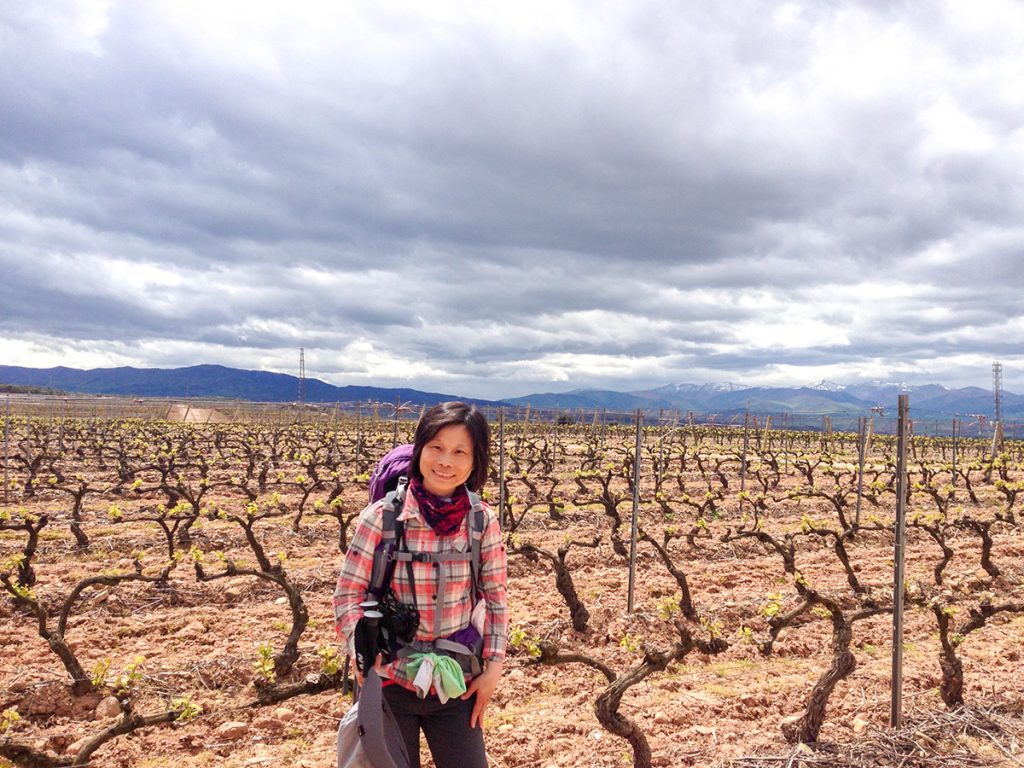
Hiking through Spain’s most famous wine region, La Rioja Autonomous Community, I noticed its scenery is different from the green fields and blooming flowers found in the Chartered Community of Navarre: the red landscape formed by the vineyards and wineries along the path provides the best scenery!

Due to my previous knee pain, I decided to shorten the amount of distance that I would cover. Initially, I hiked around 20 km and wanted to rest in Ventosa. But God seemed to have other plans for me. When I arrived at the local shelter around 1PM, there were no beds available. When I arrived at Najera around 4PM, not only was the shelter already full, but the town’s hostels and hotels were also fully booked.

When your body is extremely tired but you can’t stop to rest, you just feel absolutely miserable. Finally, by the time I reached Azofra, it was already 7PM. It was perhaps the toughest, longest hike that I did. Moreover, given the original plan was to hike only 20 km, I felt both mentally and physically drained.

Vineyards and wineries along the path

Even though I was extremely tired, I still stopped to take pictures of the beautiful scenery that I saw.

DAY
07.

2013.5.8
15KM

AZOFRA

SANTO DOMINGO

The vineyards and wheat fields that stretch endlessly along the path weave a beautiful scenery. There was occasional drizzle today, making it the second rainy day since the first day of the pilgrimage.

I was really tired from yesterday’s hike, so I only hiked about 16 km and arrived at Santo Domingo de La Calzada, where I decided to rest. It is regarded as a town brimming with spiritual energy. Domingo de La Calzada who was born here in the 11th century built stone roads, bridges, accommodations and treatment centres for pilgrims.

There is a miracle in the small town. During medieval times, a young man who went on a pilgrimage with his parents was accused of stealing and later executed. His parents then took it up to the magistrate. The magistrate pointed to the roast chicken on the table and said, “Your son’s crime is indisputable, the same as the death of this chicken.” Soon after, the rooster miraculously came alive. To this day, different live roosters and hens are put on display in the cathedral each month.

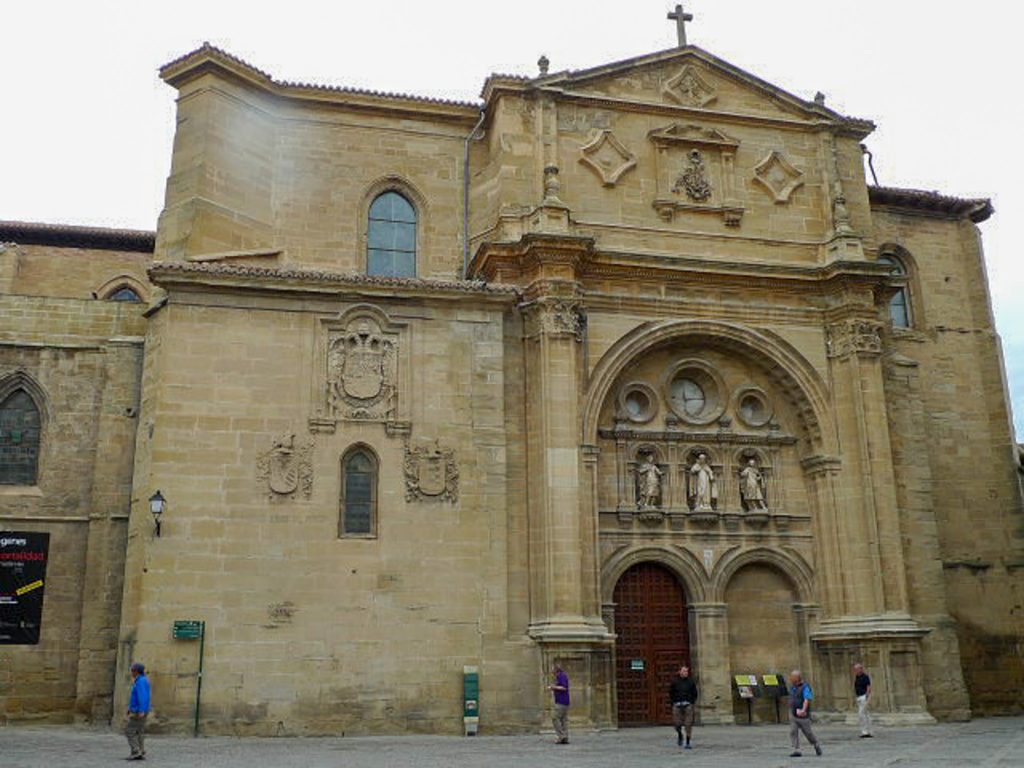
The cathedral with the miracle of the resurrected rooster

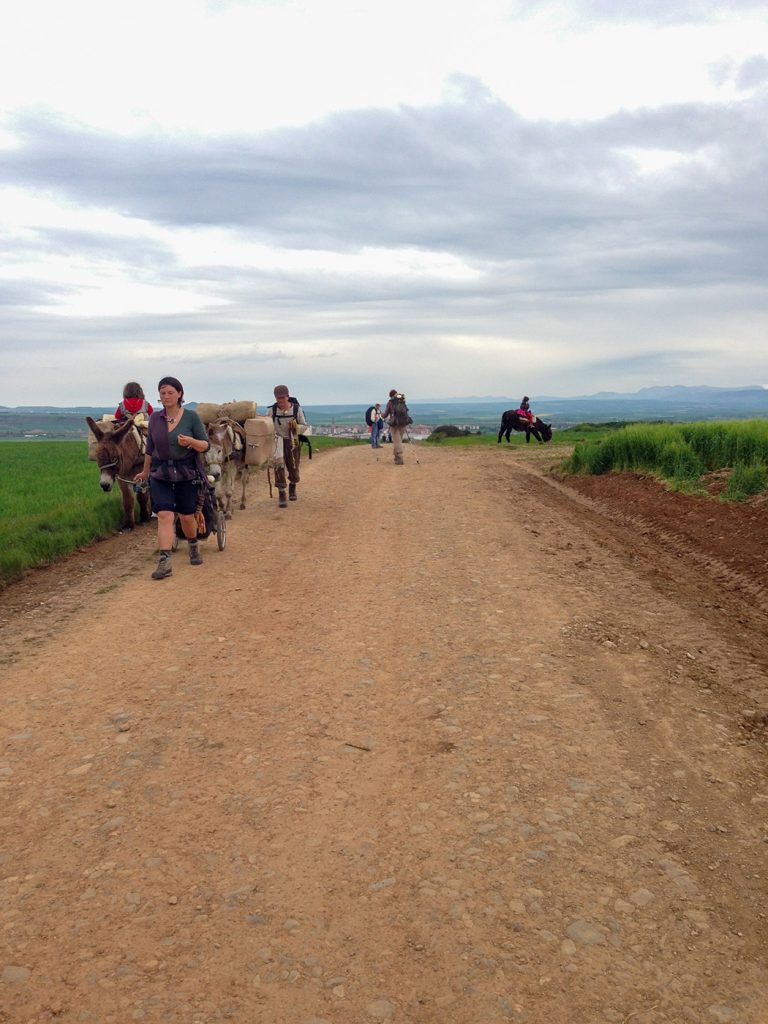
I encountered a family of pilgrims riding donkeys on the path

DAY
08.

2013.5.9
25KM

SANTO DOMINGO

BELORADO

It was already drizzling when I set out this morning. The rain intensified once I left La Rioja Autonomous Community. It was really not comfortable to hike on a rainy day, making the backpack that weighed over 10kg feel even heavier on my shoulders. I could only concentrate on hiking and had no time to appreciate the scenery along the way.

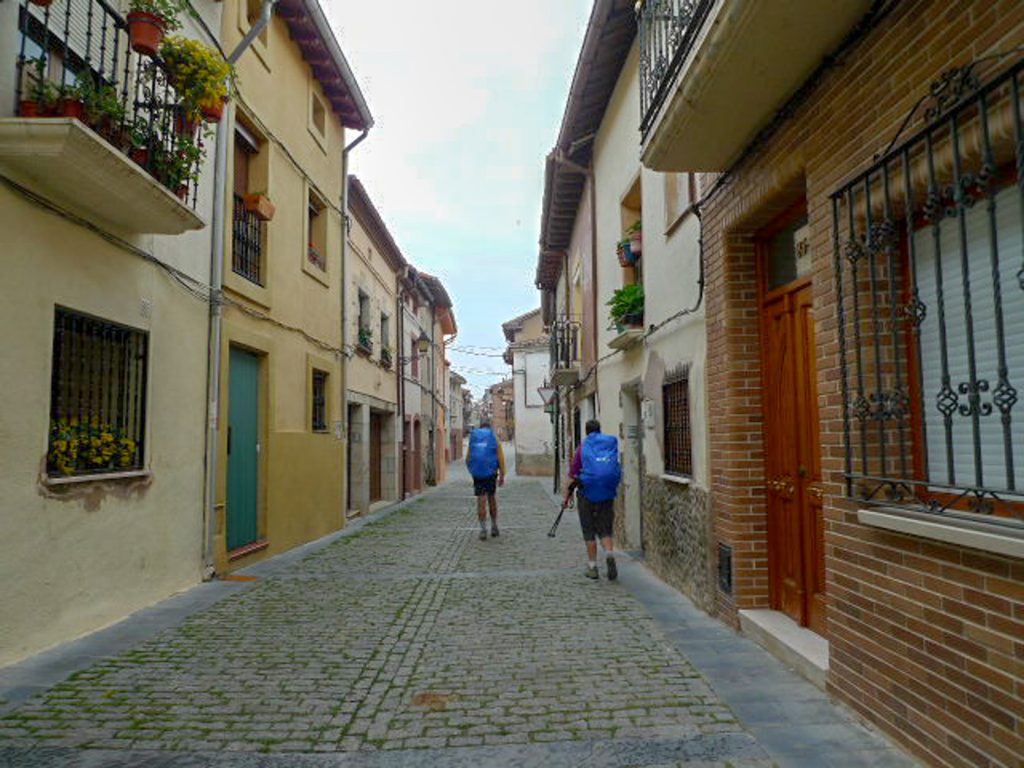
After leaving La Rioja and entering Castilla y León, you could no longer see distance signs as you would on La Rioja sections of the Camino. I could only rely on yellow arrows and shell symbols for guidance.

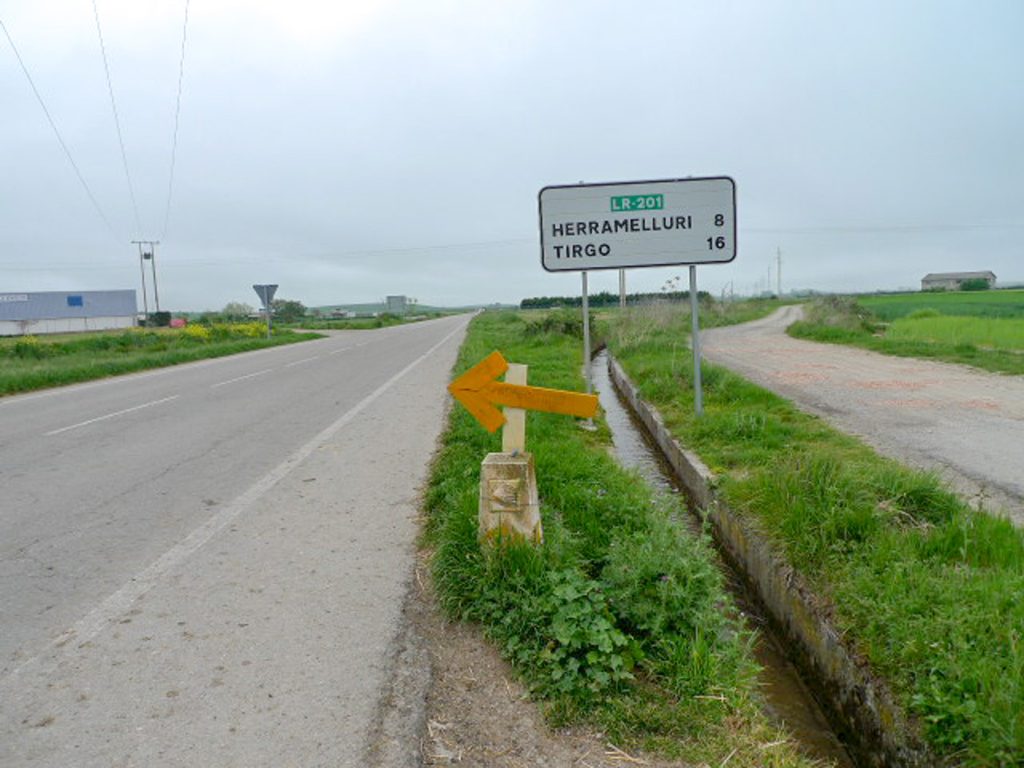
Occasionally you will be walking in parallel with highways.

Sometimes the Camino is cut off by roads like these, so you must cross over them to continue the journey.

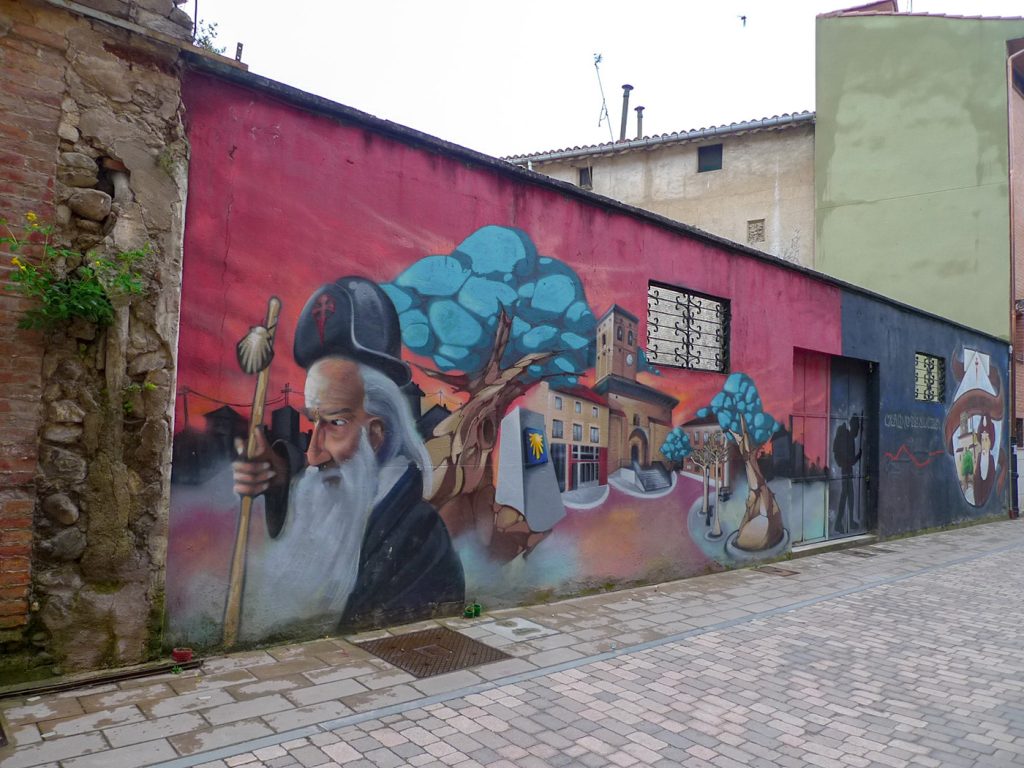
Pilgrim murals or graffiti are often seen along the way

DAY
09.

2013.5.10
25KM

BELORADO

SAN JUAN DE ORTEGA

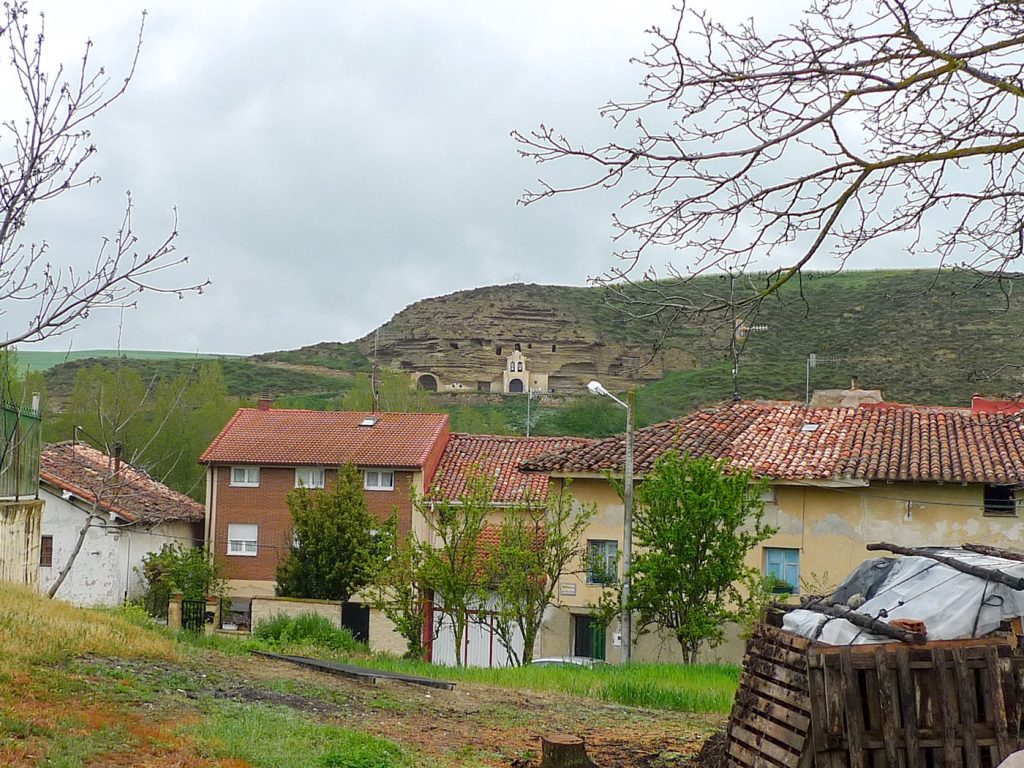
Yesterday’s heavy rain did not continue today, though it was cloudy when I set out. However, when I passed through the wheat fields, the mud on the ground was an indication of yesterday’s abundant rainfall. While passing through the town of Tosantos, I saw the Emita de la Virgen de la Peña (Hermitage of the Virgin of the Rock) monastery resting on the hillside on the nearby hill. Many pilgrims would come here and scale the hill to pay reverence.

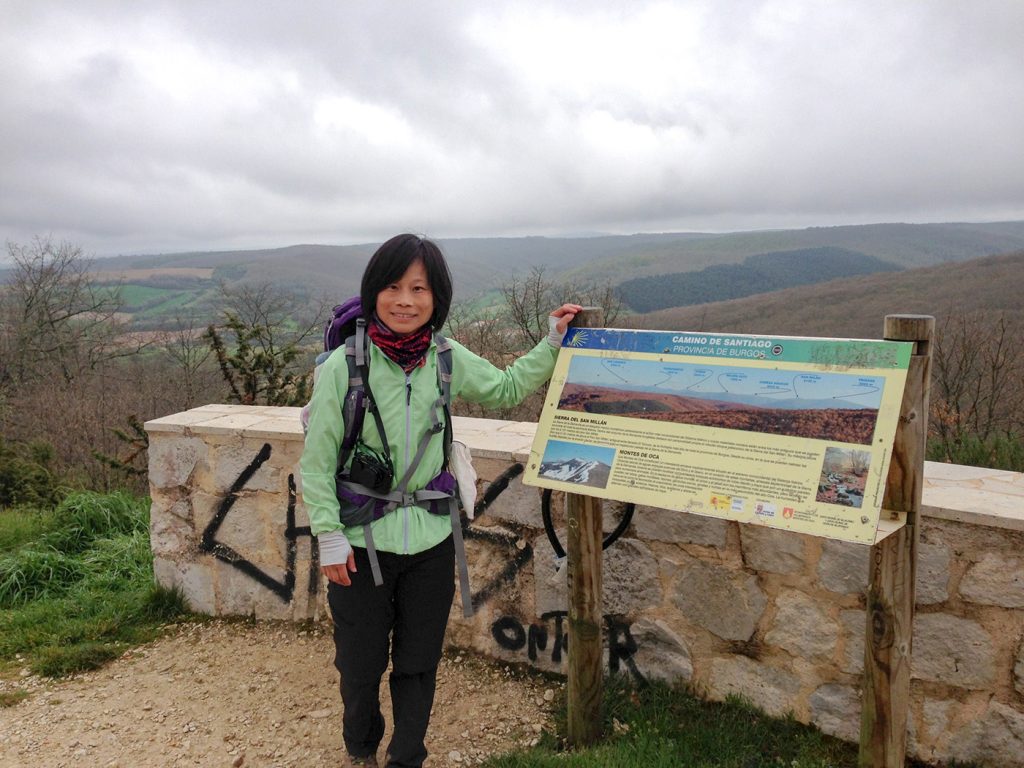
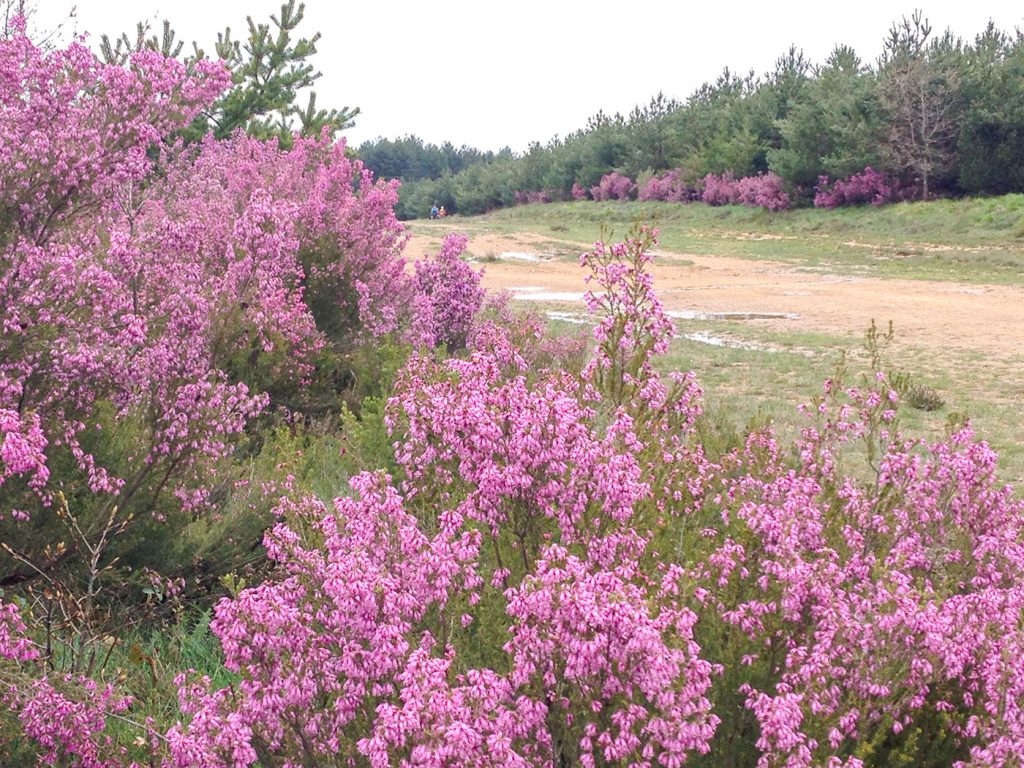
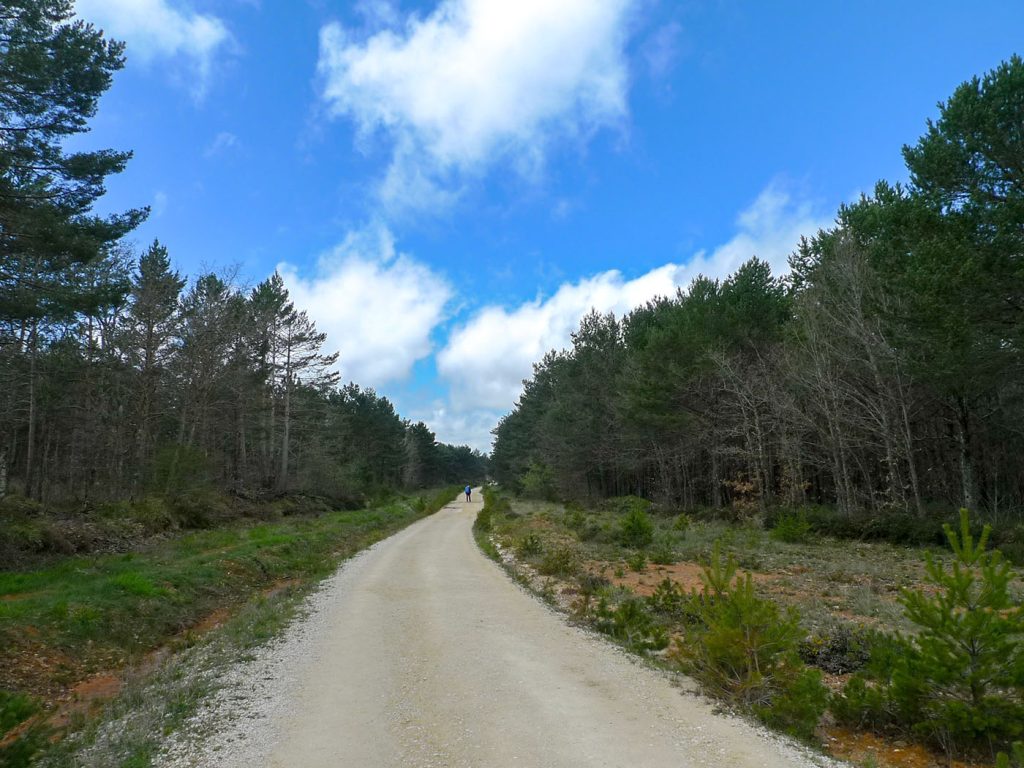
After passing the small town, I found myself amidst a forest. The elevation of the neighbouring Montes de Oca’s (Mt. Oca’s) stretches from 900 meters to around 1100 meters. Before I could reach the San Juan de Ortega monastery, I had to walk through a roughly 12 km forest trail. While walking alone, I could only hear the sounds of wind, buzzings of insects, and chirpings of birds. I would occasionally walk in parallel with the N-120 highway. I would see cars whizzing by from a distance, a reminder that civilization is not far from me.

From the vantage point, you can see Montes de Oca in the distance

Walking through this 12 km long forest alone, it really gives off an otherworldly vibe.

Observing the Emita Virgen de la Peña monastery on the hillside from the Camino

DAY
10.

2013.5.11
30KM

SAN JUAN DE ORTEGA

BURGOS

It was very cold when I set out today. Since there was no thermometer, I could only gauge how cold it felt with my body. It was probably the coldest morning compared to the past few days’, so I simply put on all my clothes to keep myself warm. Fortunately, as I crossed the border of Burgos province past noon, the clouds cleared and the temperature rose.

Whilst hiking, I passed the small town of Atapuerca, where 1.3 million years old human fossils are stored. It is said to be the site with the richest antiquities in all of Europe. Unfortunately, I was in a rush and could not stop to visit.

The yellow arrow always guides the pilgrims towards the right direction.

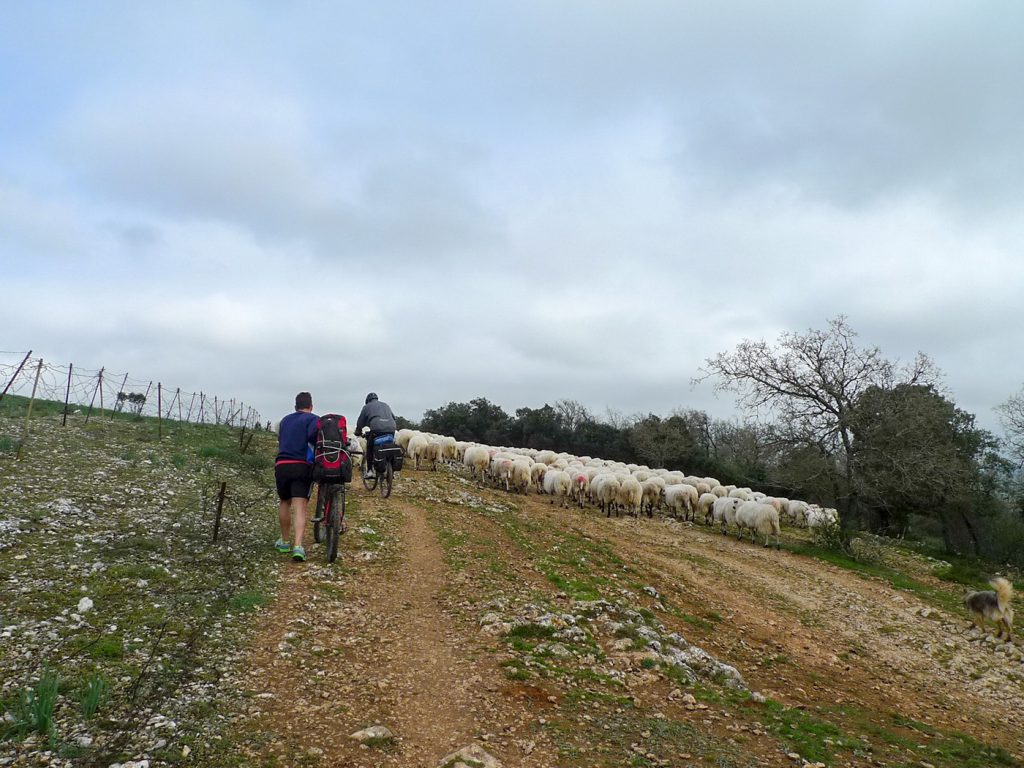
A funny photo of hiking together with sheep on the Camino

DAY
11.

2013.5.12
-

BURGOS

Today is a day off. I have hiked roughly 240 km. I need to keep myself healthy and energized throughout this trip, so I really shouldn’t push myself too hard.

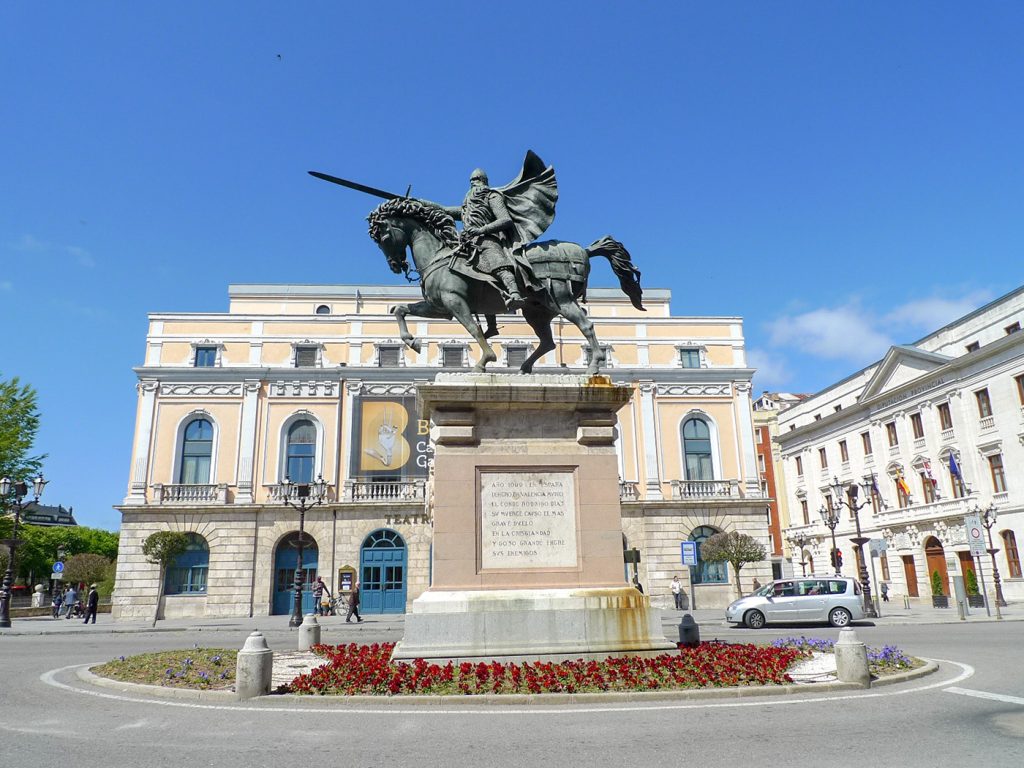
Burgos is a very clean, radiant, and lively city with beautiful culture. Its old districts are quite charming. The Gothic cathedral was declared a World Cultural site, same as the cathedrals in Toledo and Sevilla, making them the 3 largest cathedrals in Spain. Moreover, here is also the hometown of El Cid, Spain’s national hero.

I will be entering Meseta Central (Inner Plateau) tomorrow. I heard its wheat fields stretch for more than 200 km. Tomorrow’s hike will be the biggest challenge to both my stamina and mental fortitude.

The full view of the cathedral from the mountaintop.

Burgos Cathedral

Since it’s my day off, it’s time to stuff myself full of food!

Statue of Spanish National Hero El Cid (TL Note: the Spanish Renaissance took place in the 14th century; Rodrigo Diaz was born in the 11th)

DAY
12.

2013.5.13
21KM

BURGOS

HORNILLOS DEL CAMINO

The weather was good when I set out, filling my heart with joy. I then gleefully pranced towards Meseta.

After entering Meseta, the architecture gradually became minimalistic. When passing some Meseta villages, I noticed their decaying, old landscape, and many homes were either on sale or abandoned, clearly showing the wealth gap between different autonomous communities of Spain.

When you unknowingly enter a world of blue sky and green pasture, you see something so artistically profound that not even a camera can capture. It’s a scene that can’t be described even when you are immersed in it. You can just imagine the autumn wheat harvest, with fields of golden waves swaying in the wind. Or, during harsh winter, Meseta transforms into a desolate land with exposed yellow gravel.

Meseta’s wheat fields that seemingly stretch forever.

Several villages where I sojourned before entering Meseta that made me feel like I was in medieval times, as if time froze in these serene spaces.

The village houses seem vastly different from the ones in previous towns/cities.

DAY
13.

2013.5.14
21KM

HORNILLOS DEL CAMINO

CASTROJERIZ

When I set out in the morning, the village was quiet. There seemed to be only pilgrims in the village. I had to walk to another town 11 km away from here to get breakfast. It only took me about 3 hours to get there, setting a new personal record.

Before arriving at Castrojeriz, I passed the Ruins of San Anton, a 15th-century monastery that also functioned as a hospital for pilgrims. Now, only its Gothic arches remain standing. At the same time, modern roads are laid over where its front porch once was. The remaining arches serve as a floating bridge, connecting the continuous flow of history and callously watching over countless passersby.

After walking for 11km, I arrived in Hontanas to have my breakfast.

Pilgrims heading towards Castrojeriz

Endless wheat fields

Ruins of San Anton - a 15th century monastery that functioned as a hospital for pilgrims.

DAY
14.

2013.5.15
26KM

CASTROJERIZ

FROMISTA

It was pouring heavy rain as I set out at 7AM. It was the heaviest rain in recent days. The muddy road between the wheat fields, which many pilgrims trampled over, became even muddier. In order to avoid slipping and getting injured, I had to step into the wheat fields, for only then can I move forward. The road from Boadilla del Camino to Frómista stretches nearly 5 km along Canal de Castilla (Canal of Castilla). Being able to enjoy different and charming sceneries every day was the best part about this pilgrimage.

Some pilgrims found Meseta’s scenery boring, but I really liked its vast open space. Moreover, its wheat fields also give off different vibes as weather changes.

The hiking pole of a pilgrim that I encountered on the Camino. It looked like a wizard’s rod.

DAY
15.

2013.5.16
TRAIN

FROMISTA

LEON

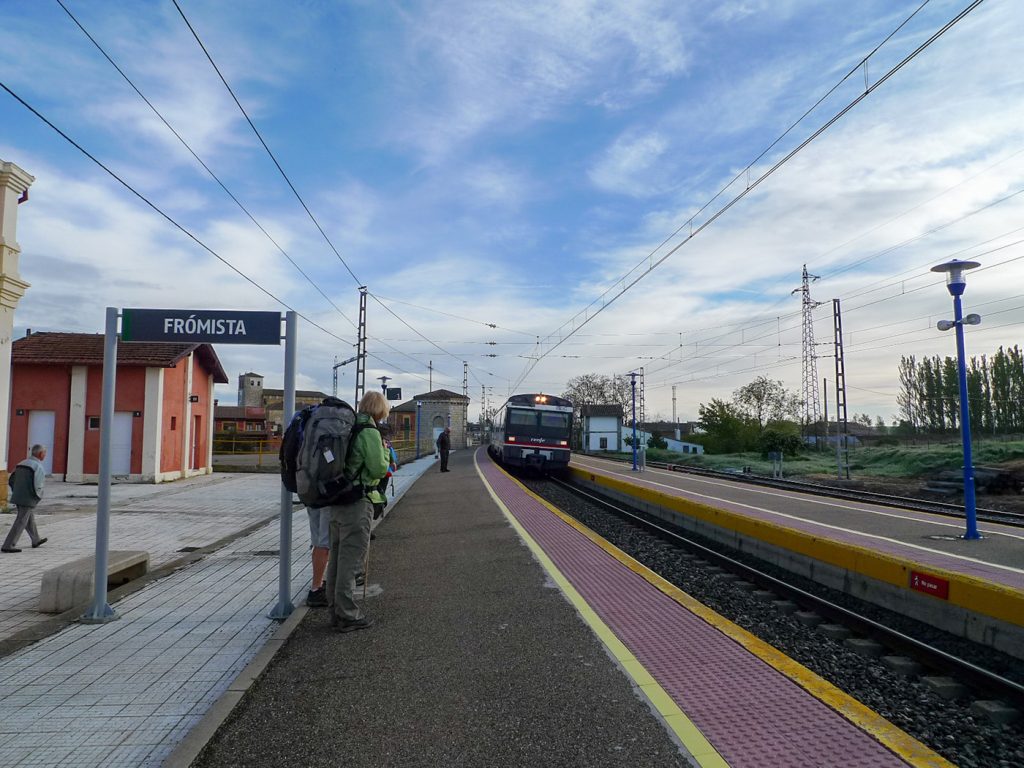
The temperature in Frómista in the morning was quite low, around zero degrees. The exhaled breath formed a wisp of white smoke in the air. When I stood on the empty platform and waited, I was shivering from the exposure to the cold that’s enough to turn my body into freezing icicles.

Since I failed to account for the weather changes and shelter’s bed availability, I was already a bit behind schedule. In order to reach Santiago de Compostela within the scheduled time, I had to skip the rest of my trip in Meseta and take the train directly from Frómista to Leon.

When I arrived in León, the wet, cold weather urged me to buy some warm clothes. Who could have predicted in the second half of the pilgrimage, especially late in May when birds sing and flowers bloom, that I would need to wear a sweater and insulated jacket?!

Frómista’s unstaffed station. Thankfully the wait for the train wasn’t long.

León Cathedral

The northern Spanish city, clean and radiant; it feels like a safe and comfortable place.

DAY
16.

2013.5.17
22KM

LEON

VILLADANGOS DEL PARAMO

After leaving the city of León and heading to the town of La Virgen del Camino, you would see many hybrid troglodyte homes along the path. Most are abandoned, but some are still preserved. These homes seemed to be the remnants of the 19th century mining industry. The villages that I passed along the path looked desolate, decayed, and impoverished. By the end of this stretch of the path, if it weren’t for the occasional shell symbols, I would begin to question whether I was going the wrong way.

These hybrid troglodyte homes are probably remnants of the 19th century mining industry.

Three friends that I met on the hike. These noble souls would accompany me to hike through difficult roads in the coming week.

DAY
17.

2013.5.18
28KM

VILLADANGOS del PARAMO

ASTORGA

It was really painful to walk in temperatures close to zero, especially with a headwind almost the entire time. My exposed hands freeze so quickly. At that moment, the beautiful spring sun above was just an alluring illusion.

My hands were so cold that when I arrived in Astorga the first thing I did was buy a pair of cold weather gloves. During the second half of the pilgrimage, my backpack gained more weight instead of losing any.

On the way, I passed Hospital del Órbigo. The town has the longest medieval bridge. The bridge is the only way for pilgrims to continue their pilgrimage, and it’s now used exclusively by pedestrians.

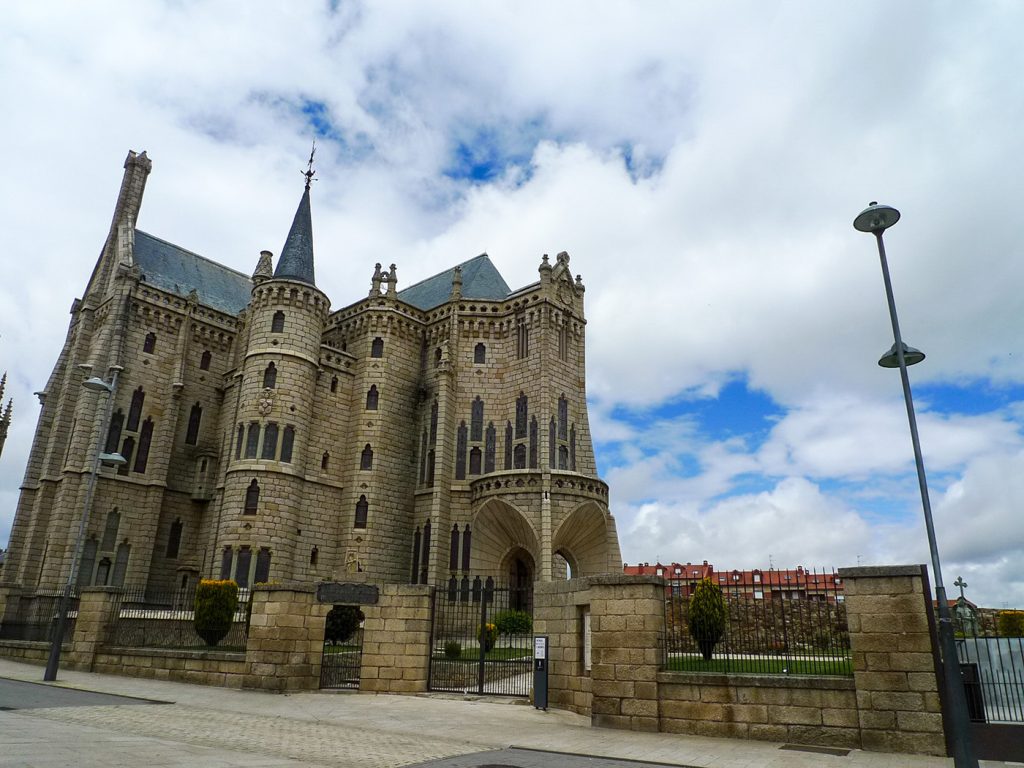
The city of Astorga is well-known for its ancient Roman ruins and Gaudí’s architecture works. It also has a private chocolate museum, where you can catch a glimpse of the history of how chocolate affected Astorga’s economy in the 18th and 19th century.

This blue-roofed castle with fairytale-like towers by the Spanish architect genius Gaudí is a neo-Gothic building that was built from 1889 to 1913. It is now the Museum of the Camino.

The temperature at 8:30AM. To set out in such cold weather was really a big challenge!

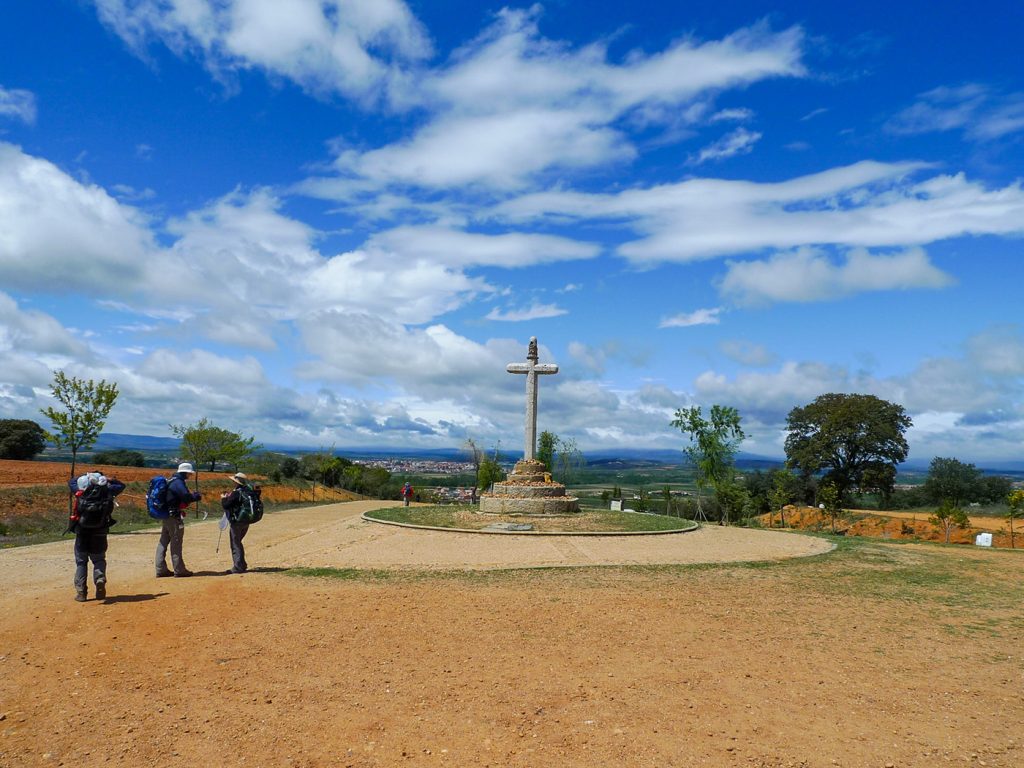
Overlooking from Alto Santo Toribio’s cross-shaped stone statue, you can see the fortress-like Astorga resting in front of the mountain range. The scene makes for a beautiful stamp.

DAY
18.

2013.5.19
28KM

ASTORGA

FONCEBADON

Last night’s weather report forecasted heavy snowfall on the mountains, and it was forecasted for Foncebadón, where today’s destination would be. This made me a tad worried whether I could overcome the low temperatures when I set out early this morning. The air was so cold that my nose kept running throughout the hike. Despite the beautiful views along the way, all I could do was keep pushing forward.

After passing Murias, the gentle slope gradually steepened the farther I hiked, and the architectural style of surrounding villages changed drastically. Influenced by the Galician culture, the old village homes and walls were made from stones.. After passing El Ganso, there was a long stretch of mountain trails, surrounded by rolling mountains and picturesque scenery. While passing through the village of Rabanal del Camino, despite the steep trails, the view of the beautiful mountains became clearer and more expansive.

The trail was almost entirely uphill, varying only in degree of slope—gradual, gentle, or steep.

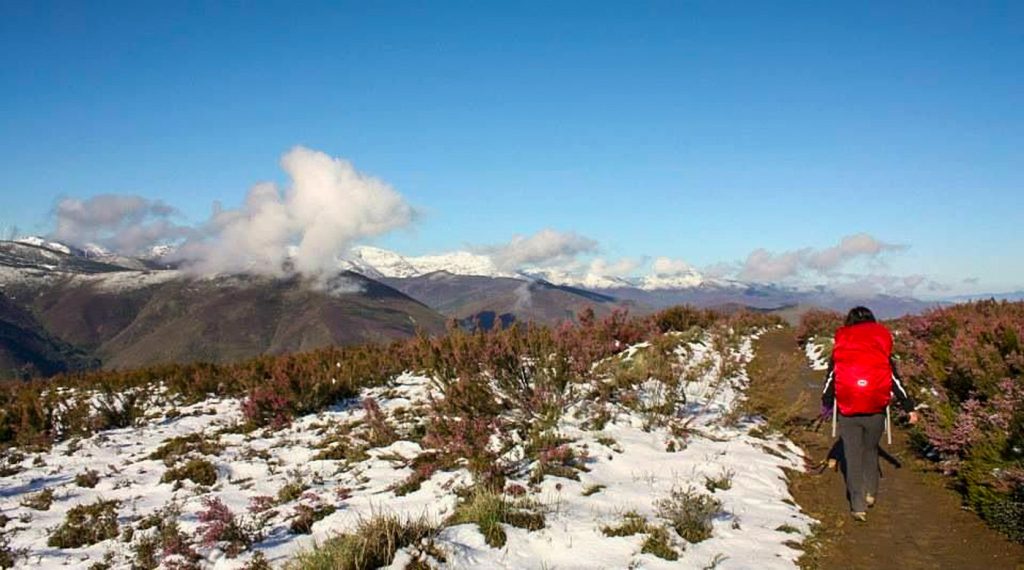
Behind me were the snow-capped mountain range.

DAY
19.

2013.5.20
28KM

FONCEBADON

PONFERRADA

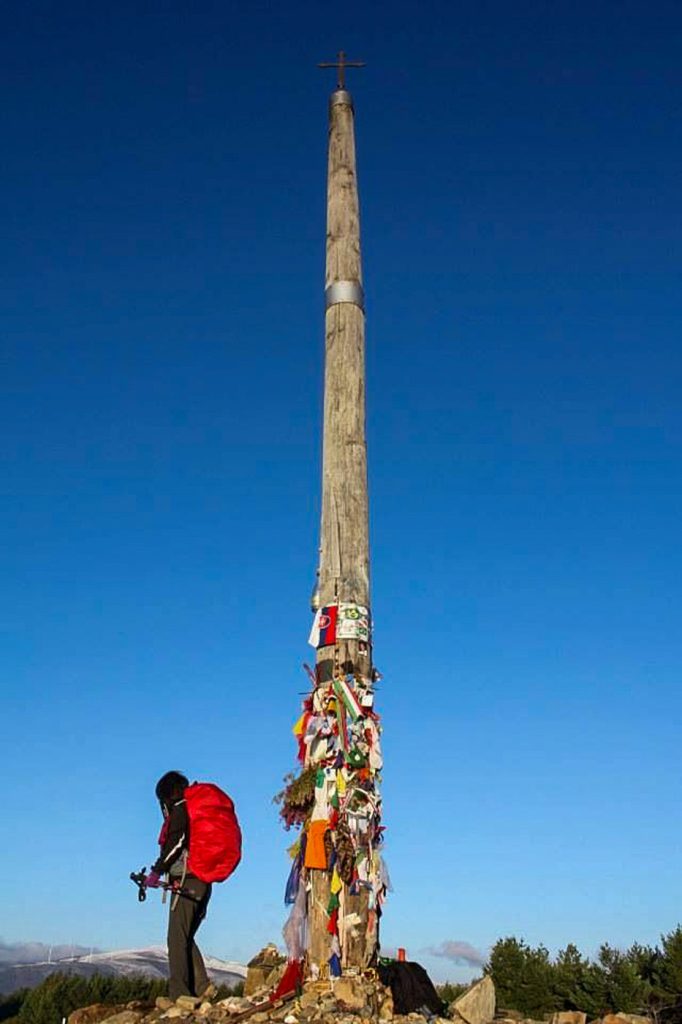
After hiking through a beautiful mountain trail, I reached the highest point of the Camino. On top of the 1.5 km high mountain stands Cruz de Ferro (Iron Cross), which is a wooden pole with an iron cross sitting on top. Each pilgrim would lay a rock that they brought from their hometown beneath the pole. This thousand-year-old tradition symbolizes throwing away one’s burden.

The small villages that I passed by today were all ancient stone-house settlements with sturdy and durable buildings, which were different from Castile y León’s agricultural settlements. In many houses, villagers kept livestock and poultry on the first floor, while they lived on the second.

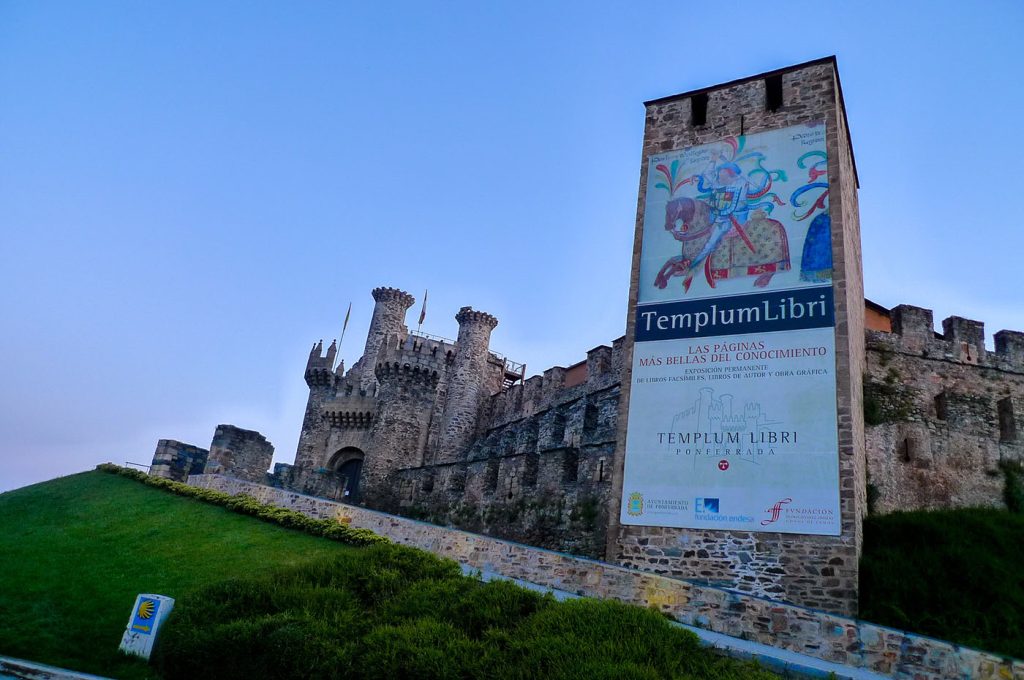
Today I stopped in Ponferrada, where Castillo de los Templarios, the headquarters of the Knights Templar, was built in the 13th century. Pilgrims must pass here to continue their pilgrimage.

The Camino’s highest point, Cruz de Ferro. The camera captured the moment when I laid down the rock and turned around.

Castillo de los Templarios (headquarters of Knights Templar), where pilgrims must pass to continue their pilgrimage

DAY
20.

2013.5.21
25KM

PONFERRADA

VILLAFRANCA DEL BIERZO

On the Camino, you would meet friendly pilgrimaging strangers from time to time, so you are never truly alone. However, when you encounter a difficult situation on the road, having friends to accompany you will lift your spirits greatly.

Despite exhausting my stamina or getting sore feet, I had no choice but to push forward, be it scaling up or descending down seemingly endless mountain trails. Whenever it seemed hopeless, hope was always there. I think, in addition to being fueled by my unyielding pride, there was also the encouragement and support from those friendly “strangers”!

Since medieval times, Villafranca del Bierzo a.k.a. La Pequeña Compostela (Little Compostela) has welcomed many pilgrims who were unable to complete their pilgrimage to Santiago due to illness, granting them La Compostela (The Compostela certificate) at the local Santiago Church.

From here on out, it is known as Camino duro (The Difficult Road).

Villafranca del Bierzo a.k.a. Little Compostela

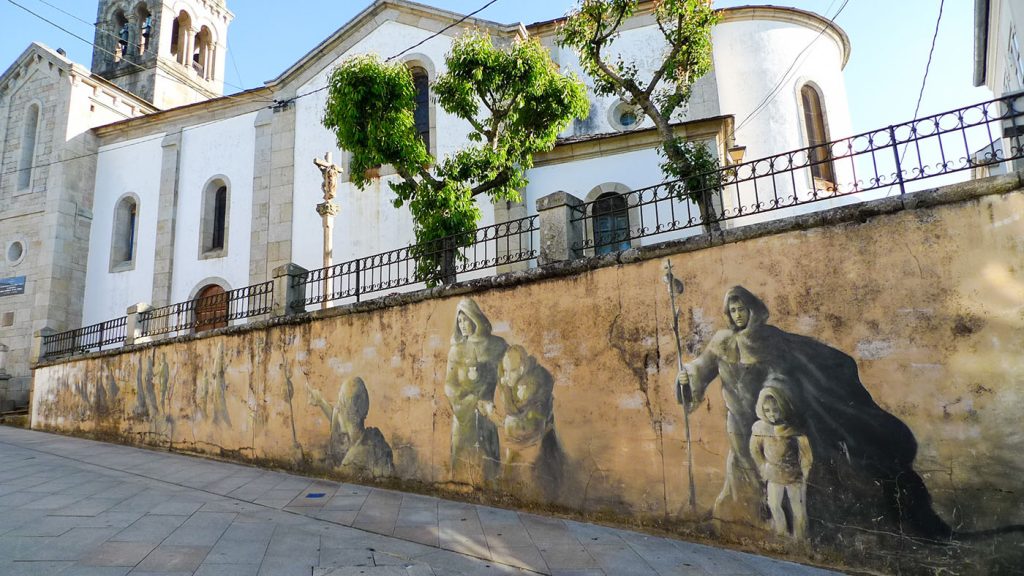
The closer you are to the Galicia Autonomous Community, the more towns will display pilgrim murals/sculptures like this as a welcoming sign.

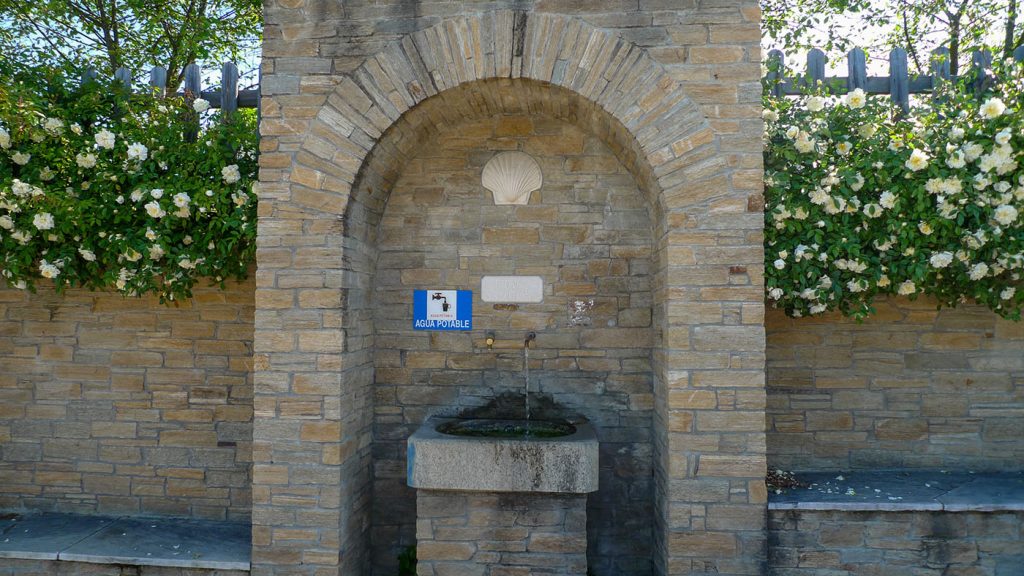
Drinking water is available at spots like this throughout the Camino.

DAY
21.

2013.5.22
32KM

VILLAFRANCA DEL BIERZO

OCEBREIRO

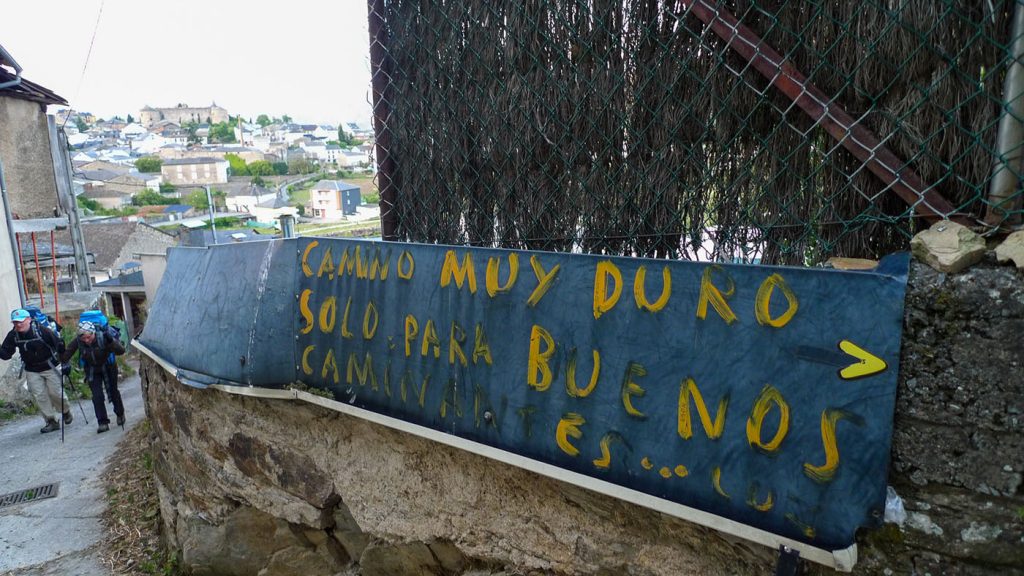
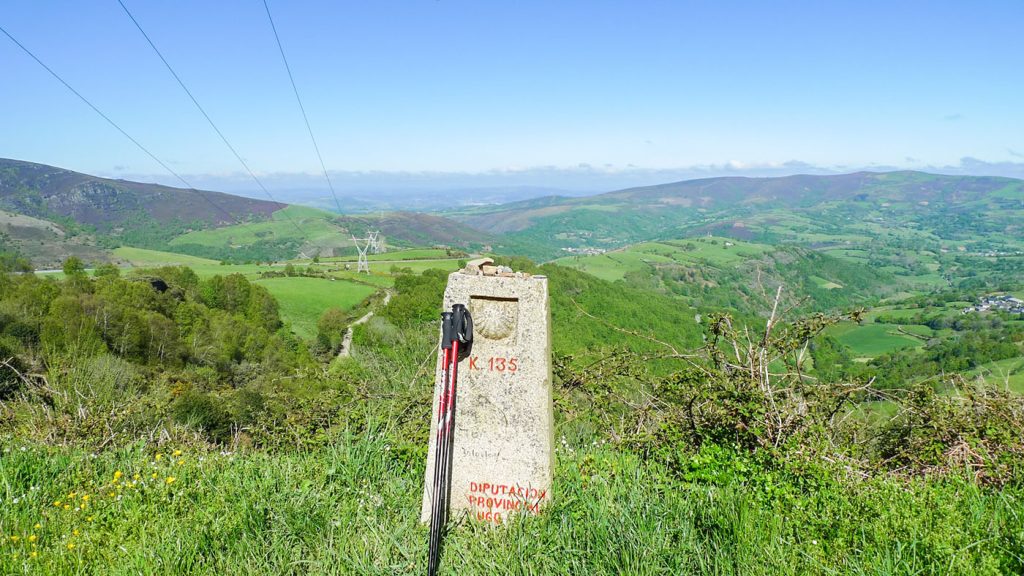
After leaving the town, if you choose to go right, there is a sign on the side that reads “Camino muy duro”, which means “very difficult road”. The mountain trail stretches for 12 km with constant uphill and downhill hiking. It was really draining on stamina.

After reaching Trabadelo, where the mountain trail ends, I then walked in parallel with the highway for about 7 km. Amid Galician mountain range, wildflowers dotted the winding streams, and charming small villages provided resting spots. Returning to the mountain trail once again, it was another steep ascent as steep as the one in the morning, spanning 11km uphill. Camino duro, aptly named!

On this pilgrimage, I was surprised by the Galician village of O Cebreiro. As soon as I entered the village, I saw traditional Celtic thatched round houses (Palloza). The Roman church in the village stores Galicia’s most prized treasure: the Holy Grail. Many catholics would come to the church to attend Mass and pay homage to the Holy Grail.

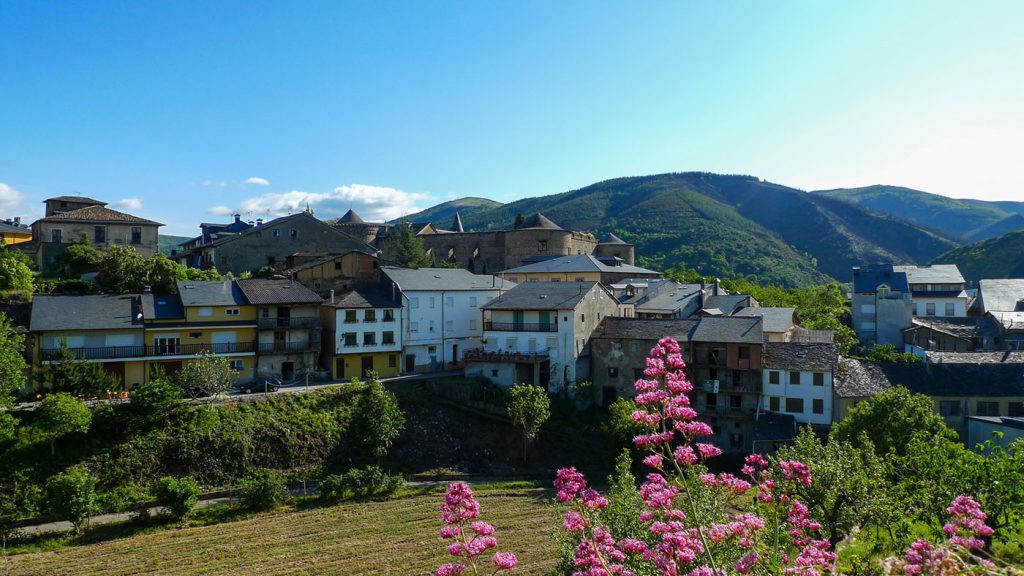
Villafranca del Bierzo (Little Compostela) at the foot of the mountain

The start of Camino duro.

Gorgeous Galician Massif

Beautiful traditional Celtic thatched roundhouse (Palloza)

DAY
22.

2013.5.23
36KM

OCEBREIRO

CALVOR

As I set out in the morning, the village was shrouded in thick fog, resembling a fairyland. It felt like a misty forest or an elven world. As the sun rose and broke through the fog, words failed to describe the scene.

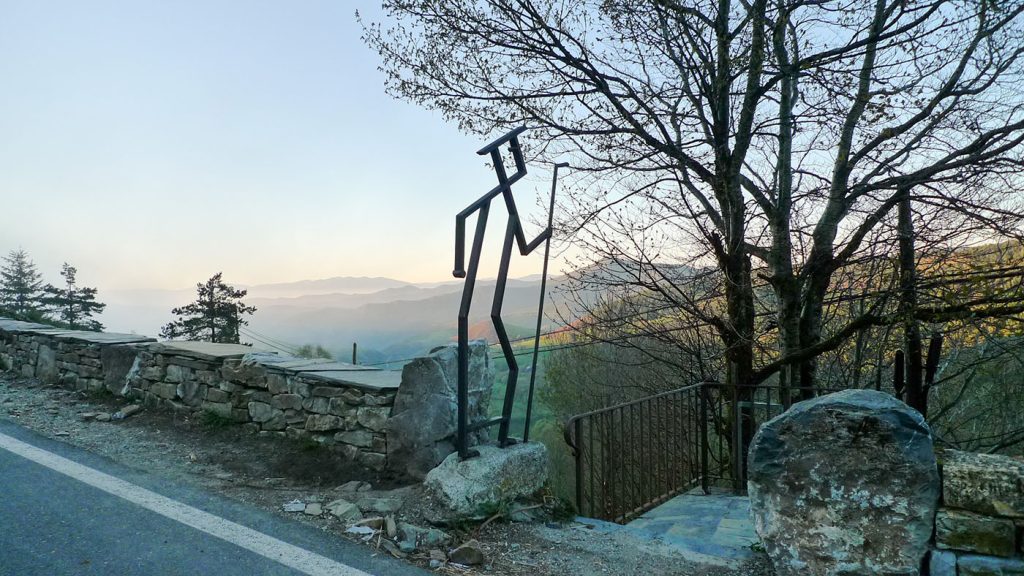
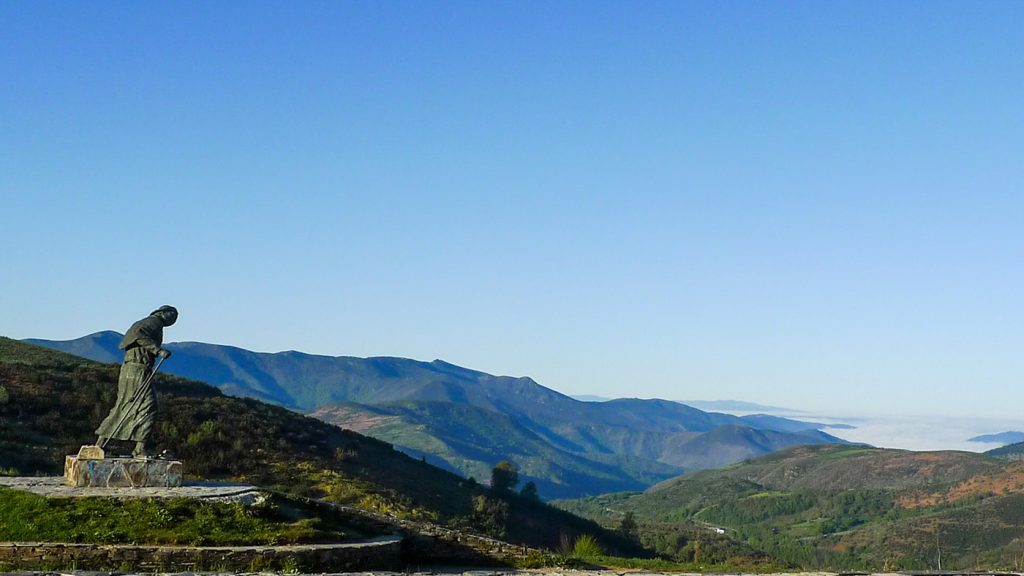
Arriving at Alto San Roque, I saw a 3-meter tall bronze statue of a pilgrim standing on the path, depicting a man advancing against the storm, highlighting Galicia’s harsh weather.

Before reaching Triacastela, my knees were in severe pain from days of walking and frequent hiking. After resting, I waited until the pain subsided and did some slow squats. Although I could still feel some pain when going downhill, I was relieved that I recovered enough to walk.

The small town of Triacastela has the one and only “Pilgrim Prison” of the Camino, the reason was that the townspeople would free up spaces in the old school gymnasium to accommodate pilgrims when overcrowded.

Misty world

The bronze pilgrim statue in Alto San Roque.

Observing Galicia’s rolling from above.

DAY
23.

2013.5.24
28KM

CALVOR

PORTOMARIN

I passed through Sarria on the way. It is a major pilgrimage town where many pilgrims start their pilgrimage because they don’t want to walk long distances and are still able to get the Compostela Certificate.  

The scenery varied from fields to meadows and from oak forest to pine forest, including a forest named Witch Valley. Reportedly, some pilgrims would trip over themselves or get lost here, but I only found the rugged mountain trail simply exhausting.

Portomarin is on the other side of Lake Belesar. In the 1950s, the entire town was relocated from the now-submerged valley to its current site.

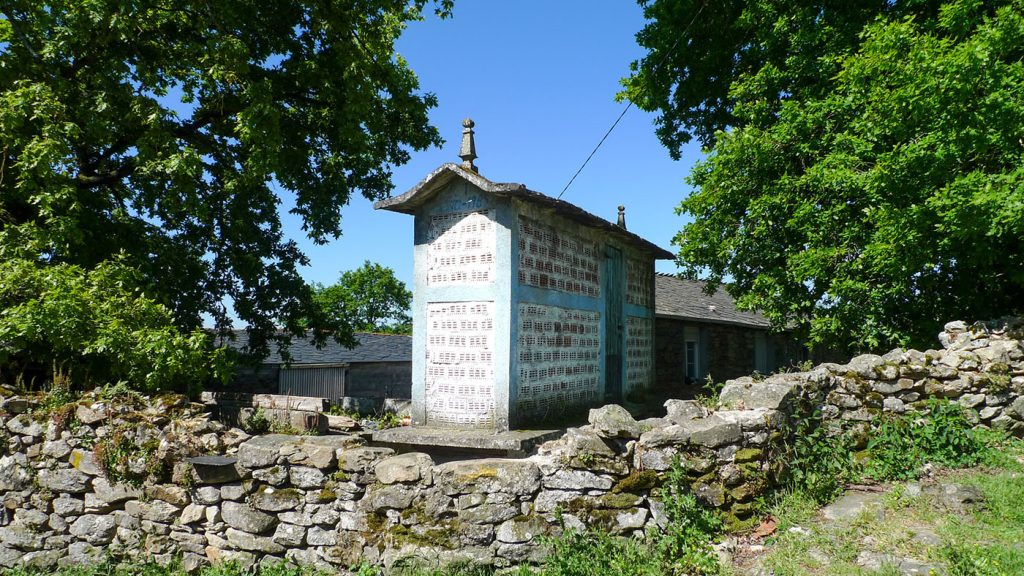
A traditional barn tool shed.

Sarria’s pilgrim mural.

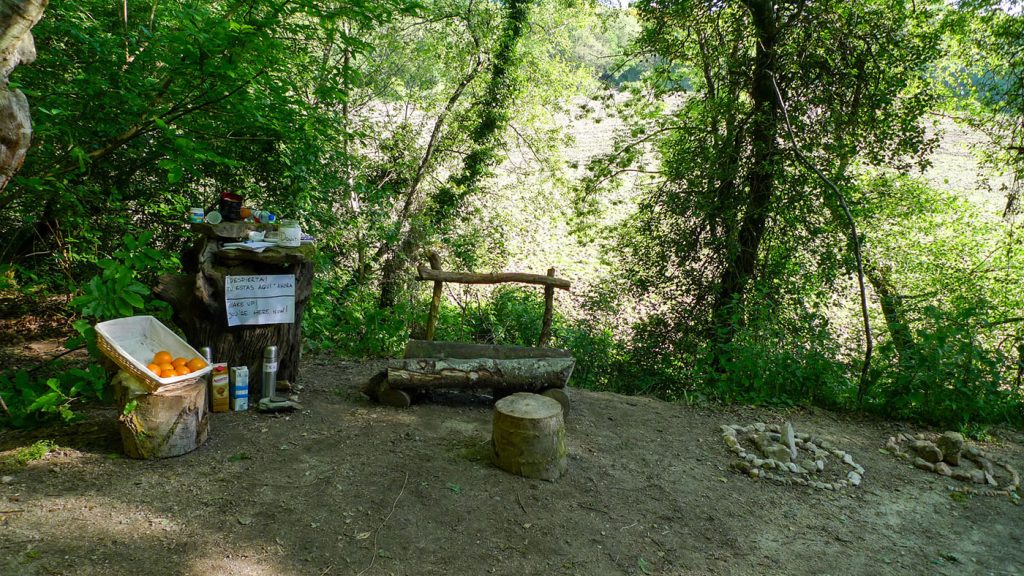
Along the Caminno, people would set up rest stops like this. Pilgrims are welcomed to help themselves to the free goods or donate their own.

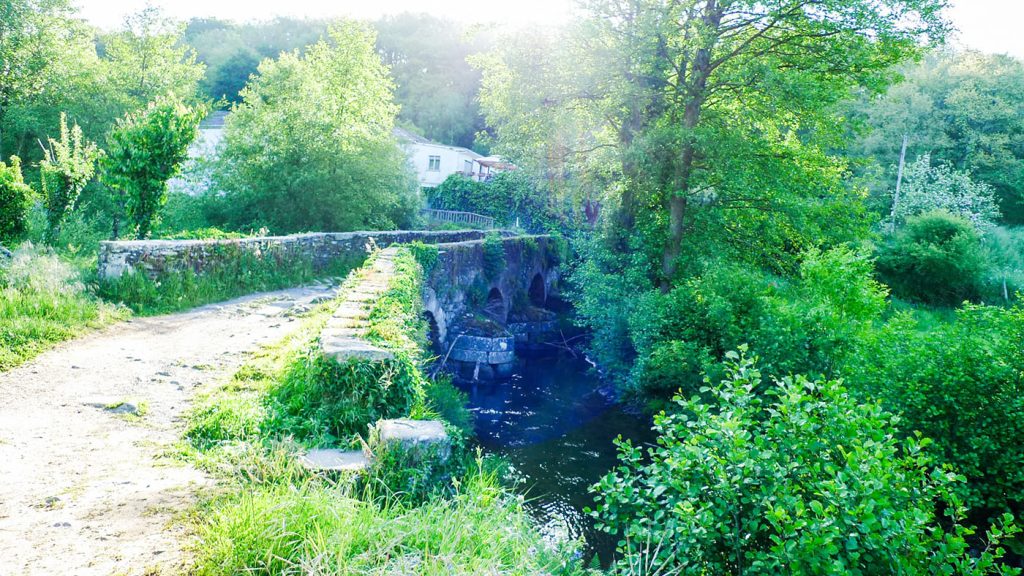
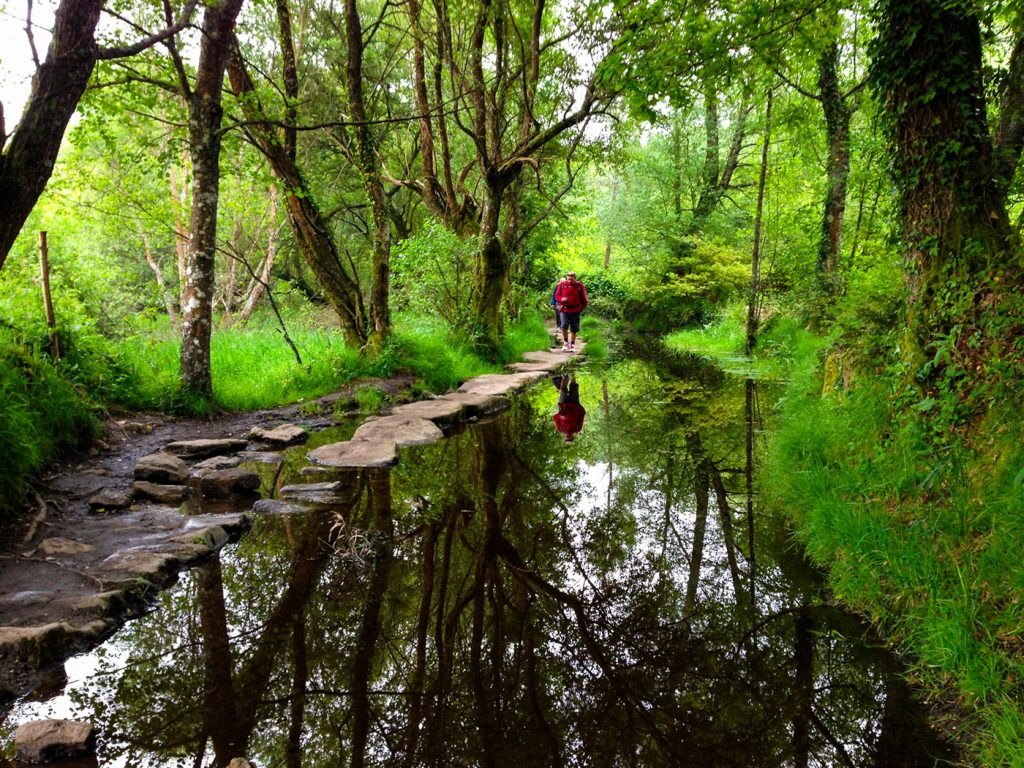
Small bridges over flowing streams are a common sight in the Galicia Autonomous Community.

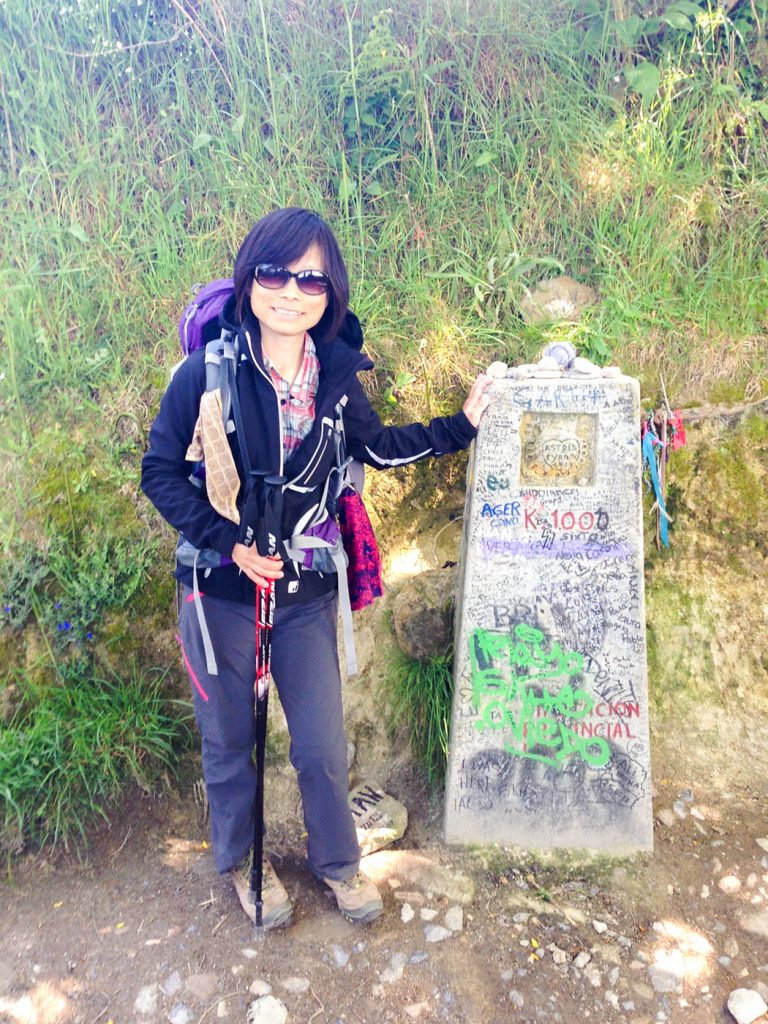
Only 100km left! Hooray!

DAY
24.

2013.5.25
25KM

PORTOMARIN

PALAS DE REI

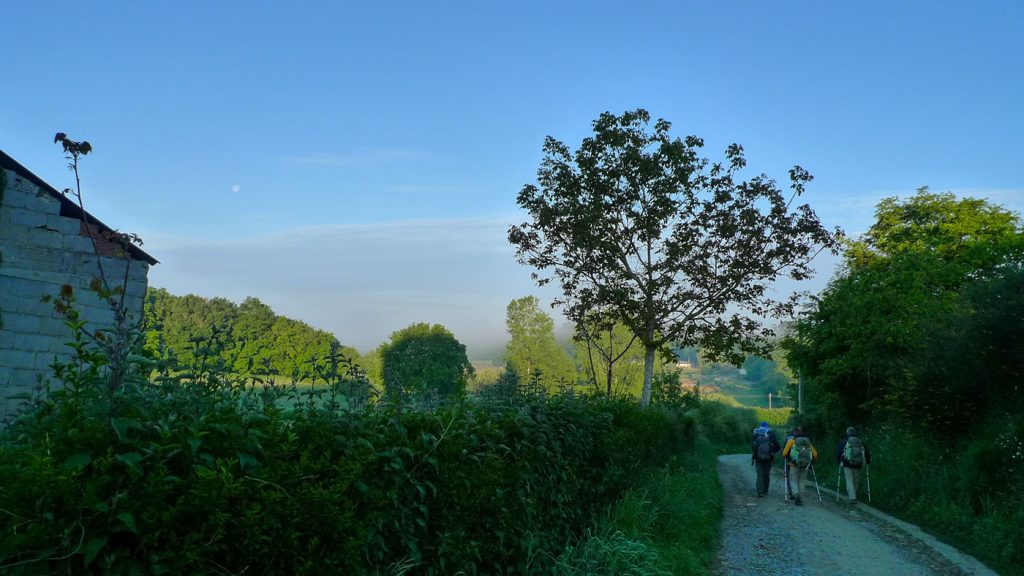
The temperature was still low in the morning. Standing on the hillside and looking at the foggy scene around the lake, I truly realized that rainy and foggy weather is indeed a typical Galician climate. Ever since I first saw this scene in the morning at OCbreiro, I have been amazed every day. 

The several woods we passed today released a strong aroma of wood, especially the eucalyptus trees, which made people feel refreshed as they breathed in, making walking feel much more relaxed. Starting from Calvor, the pattern of farms and pastures has changed slightly. The livestock are raised in enclosures, and there is no longer manure all over the road, making it much cleaner and fresher.

Because my knees continued to hurt when going downhill, I moved forward very slowly. I stopped frequently to rest, just to keep my knees safe, and I didn’t dare to show off at all.

Admiring the sunrise at Galicia

DAY
25.

2013.5.26
29KM

PALAS DE REI

ARZUA

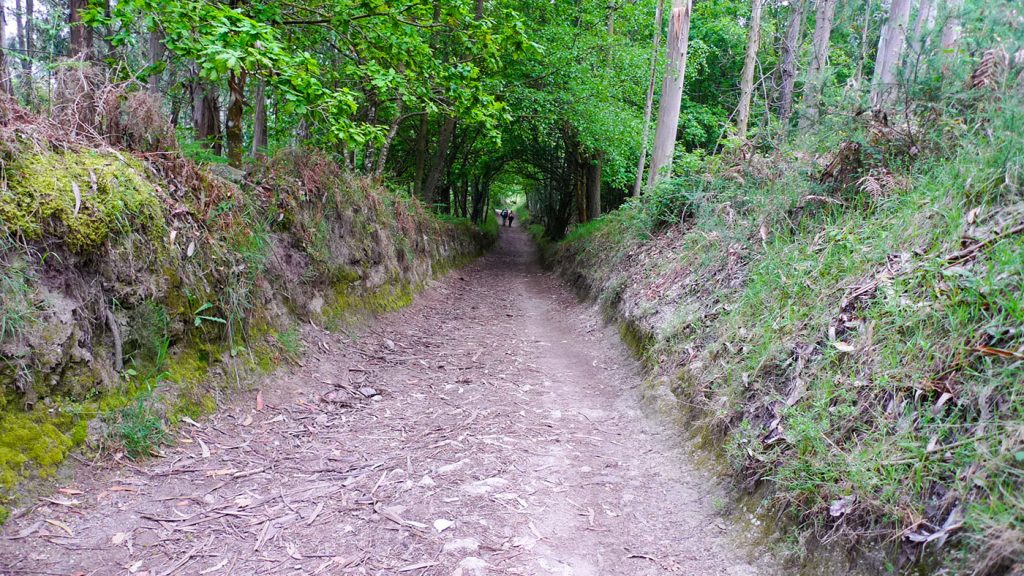
Today I passed through a lot of woodland, the green phytoncide washed my sluggish body. I crossed countless clear and pleasant streams, and was surrounded by quiet and elegant small villages, which often made people linger and linger.

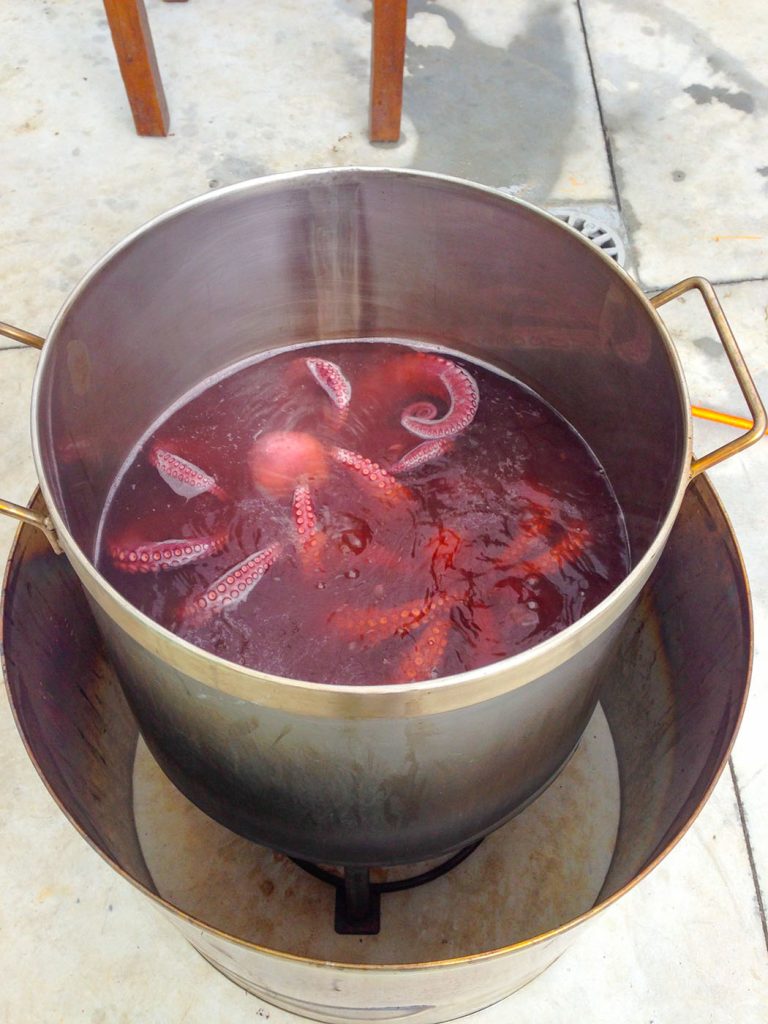
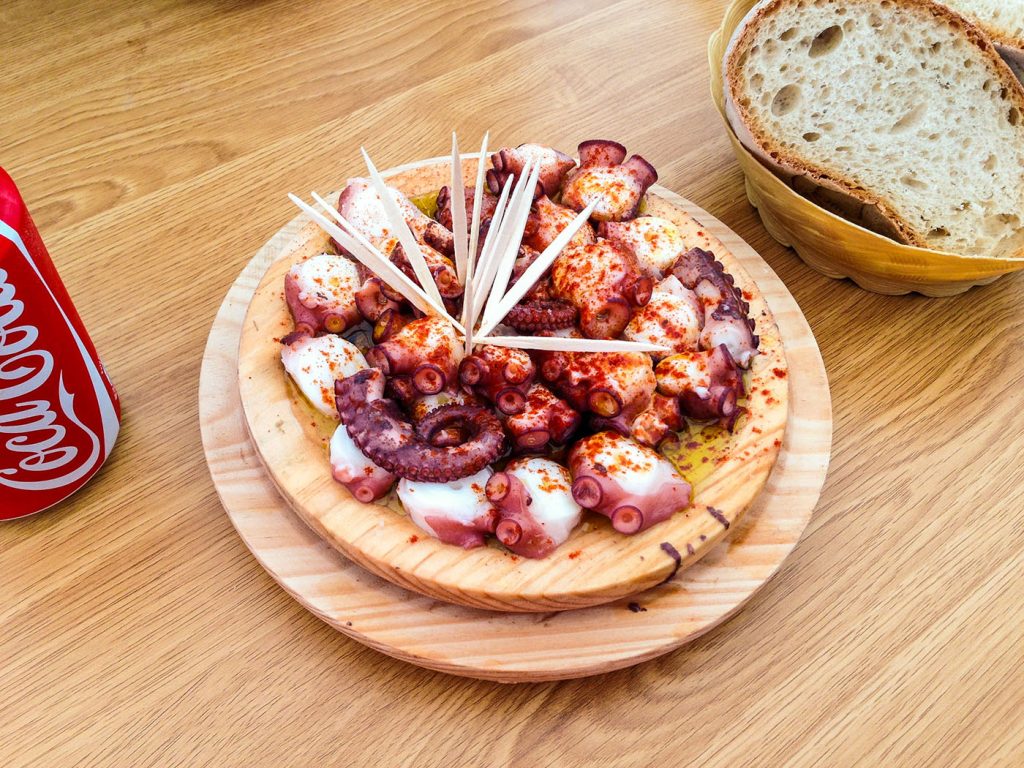
Melide is a town in Galicia that is quite famous for its cuisine. As soon as you enter the city and walk along the pilgrimage road, there are restaurants selling octopus dishes on both sides.

When I can adapt to group life where men and women share dormitories and communal bathrooms, I can walk on the pilgrimage road with peace of mind, and even walk alone in the forest or wilderness for a long time. I can enjoy myself peacefully. The fragrance of flowers and the sound of the wind have allowed me to escape from the existing framework of life.

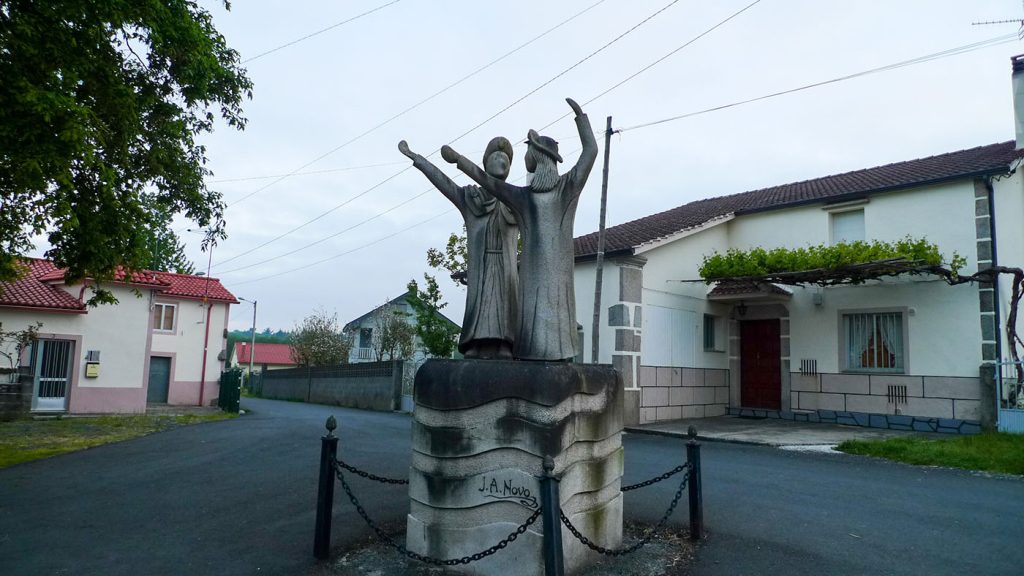
Pilgrim sculptures at the exit of the village

Galician-style octopus.

Inside Galicia, its scenery shows patches and patches of forestland

DAY
26.

2013.5.27
19KM

ARZUA

OPEDROUZO

Not long after setting off from Arzua in the morning, I entered a dense forest, surrounded by thick fog. This is a common sight in the mountainous and rainy region of Galicia. As the sun gradually rose from the east, the thick fog would gradually dissipate. Oddly enough, perhaps because I was not in a rush, my feet were moving at a briskier pace. However, my knees still hurt when hiking downhill.

During the hike, I could completely open up my eyes, nose, ears, and soul to feel and appreciate the various scenery along the way. It was an extremely rare and unique sensory feast that I experienced in my life.

DAY
27.

2013.5.28
21KM

OPEDROUZO

SANTIAGO DE COMPOSTELA

On the last day of the pilgrimage, a miracle happened again. The knee pain that had been bothering me for many days now vanished. This was truly a blessing from God, allowing my journey to end without any trouble.

After passing through a lush forest near the airport, I met two pilgrims riding white horses. What wonderful encounters, having met pilgrims riding horses and donkeys on this pilgrimage.

The Camino is like a walking UN, where people from all corners of the world journey together for their own reasons. Strangers become friends, being able to chat, drink, and enjoy moments such as admiring the sunrise and gazing at floating clouds together. Even complete strangers greet others warmly. Walking this road offers a profound and meaningful experience.

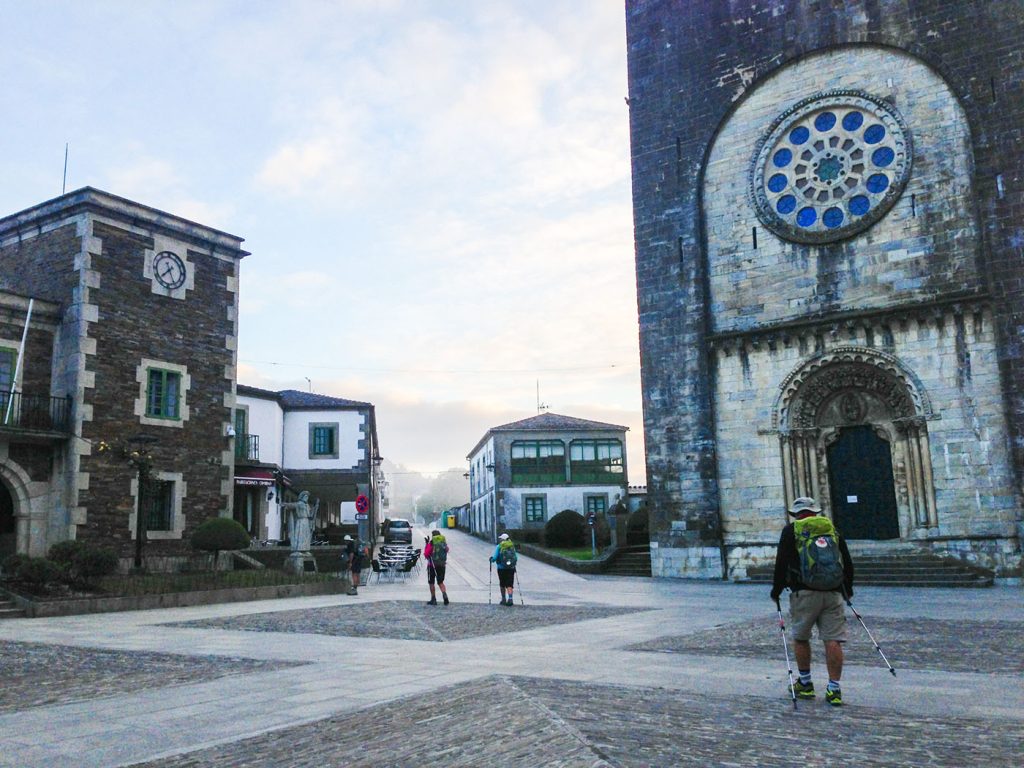
Finally arriving at Santiago de Compostela Cathedral.

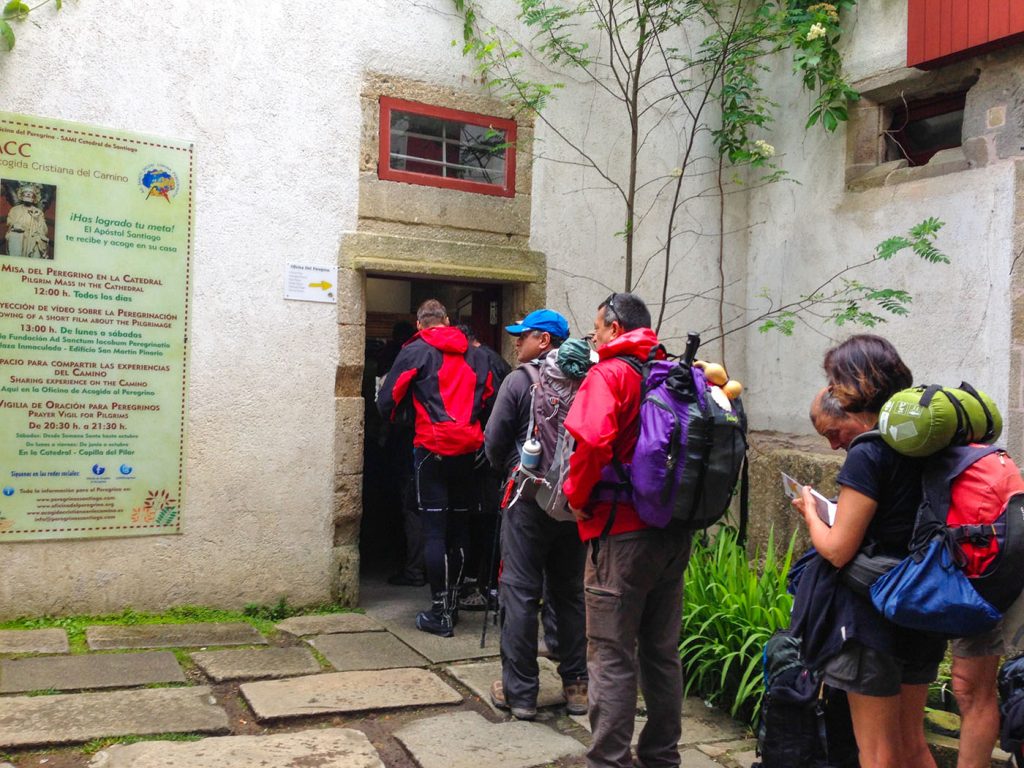
Everybody is lining up at the Pilgrim’s Office to receive their Compostela Certificate.

DAY
28.

2013.5.29
END OF TRIP

SANTIAGO DE COMPOSTELA

After completing the pilgrimage, you feel both joy and a sense of emptiness. Devoting yourself wholeheartedly to one thing for so long leaves you feeling lonely once it’s over. Waking up on the first morning after my arrival in Santiago, I felt this.

I arrived after 12 PM yesterday, missing the Mass, so I came to the cathedral early today. It was already filled with pilgrims from all around the world. After hearing all the prayers, there was an incense blessing—a fitting end to the Pilgrim’s Blessing ceremony.

With me were my shell symbol, pilgrim passport, and the pilgrimage certificate written in Latin. The final paragraph roughly translates: "Siraya Lo came with a devout heart to worship at this sanctuary. This certificate, stamped with the sanctuary's seal, attests to the completion of her pilgrimage on May 28, 2013."

During incense blessing in front of the cathedral chapel, a large incense burner is hung from the ceiling by a rope. Churchmen then pull on it, swinging the burner from side to side, moving it near the ceiling and enveloping everyone in smoke for blessings.